

Your koi can live through a Long Island winter without any trouble, as long as the pond is ready before the cold arrives. Winter here is not extreme, but freeze and thaw cycles, falling leaves and a sealed sheet of ice can still hurt fish that are not prepared. This guide explains how to winterize a koi pond step by step, using what we do on ponds across Nassau and Suffolk every fall.
To winterize a koi pond, net the pond before the leaves fall, clean out debris, cut back plants and change 10–20% of the water. Switch to a low-protein food when the water drops to 60°F and stop feeding below 50°F. Then shut down or keep running your pump, and keep a hole open in the ice all winter with a floating de-icer or an air stone placed in shallow water. On Long Island, most of this work happens between late September and mid-November.
When should you winterize a koi pond on Long Island?
Start when the leaves start turning, not when the first frost hits. On most of Long Island that means netting the pond in late September or early October and finishing the rest of the work by mid-November. First frost usually arrives between late October and mid-November, a little later on the South Shore and near the water, and earlier inland.
The water temperature matters more than the calendar date. A cheap floating pond thermometer tells you exactly where you are, and it is the best tool you can buy for winter care. You can also keep an eye on the National Weather Service New York forecast for the first hard freeze.
Koi pond water temperature guide
Koi are cold-blooded, so their appetite and activity follow the water temperature. Use this table to time each part of your winter prep.
How to winterize a koi pond: 8 steps
Follow these steps in order. Steps 1 to 4 happen while the water is still above 50°F. Steps 5 to 8 happen once it drops below 50°F.
Net the pond before the leaves drop
Leaves are the biggest winter problem in Long Island ponds. Oak and maple leaves sink, rot on the bottom and release gases and nutrients all winter. That lowers oxygen and gives you an algae bloom in spring.
Stretch a fine pond net over the whole surface and pin it down at the edges so it sits above the water, not in it. Empty it every week or two while the trees are dropping, and take it off once the leaves are down, usually in early December, so snow does not weigh it down. A net also keeps herons away at the time koi are slow and easiest to catch.
Clean out debris and do a partial water change
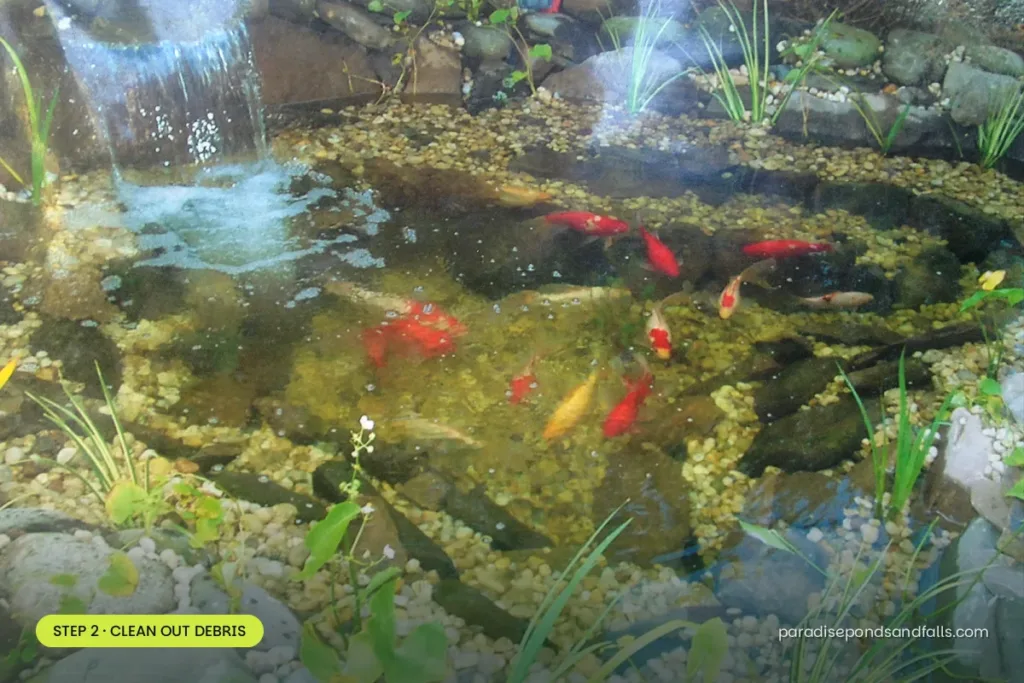 Clear water and a clean bottom going into winter mean fewer problems in spring.
Remove leaves, twigs and as much bottom sludge as you can with a pond net or pond vacuum. You do not need a full drain-down in fall. A gentle clean-out keeps the pond stable for the fish.
Then change 10–20% of the water. Use a dechlorinator when you refill with tap water, because chlorine and chloramine harm koi and the good bacteria in your filter.
💡 Check ammonia and nitrite before winter. Fish go into the cold season healthier when the water quality is good, because their immune systems slow down with the temperature.Slow down feeding, then stop
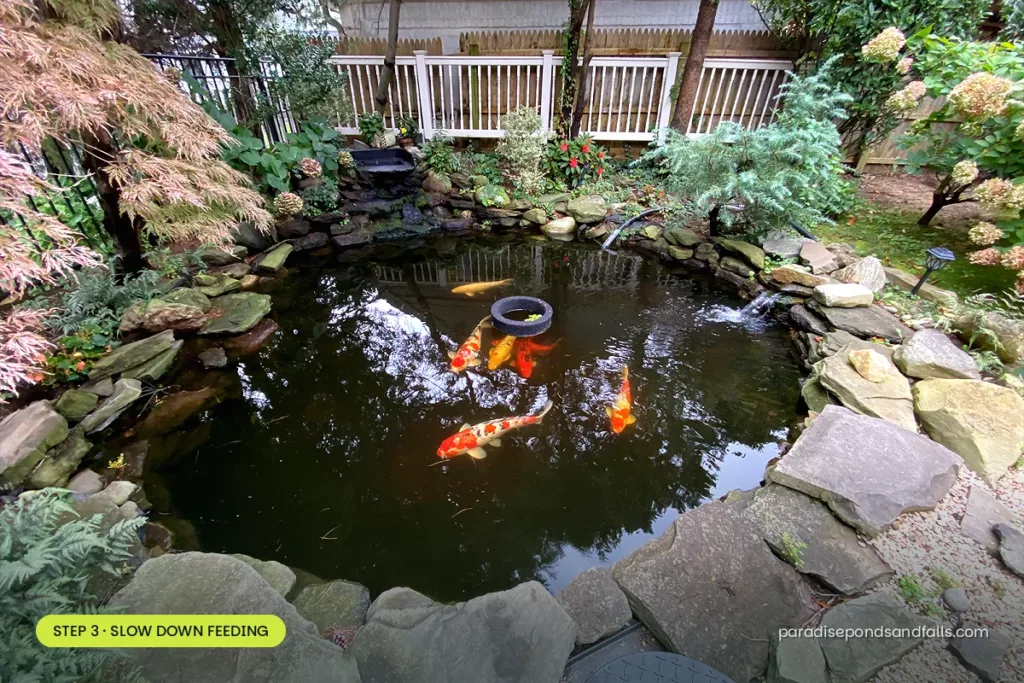 As the water cools, feed less often and switch to an easy-to-digest food.
Food that is not digested can sit in a cold koi's gut and make it sick. When the water drops to around 60°F, switch to a wheat germ food and feed once a day, only what they finish in a few minutes. Below 50°F, stop feeding completely.
Do not worry about them starving. Healthy koi live on their stored energy all winter and start eating again in spring.
Trim back and move your plants
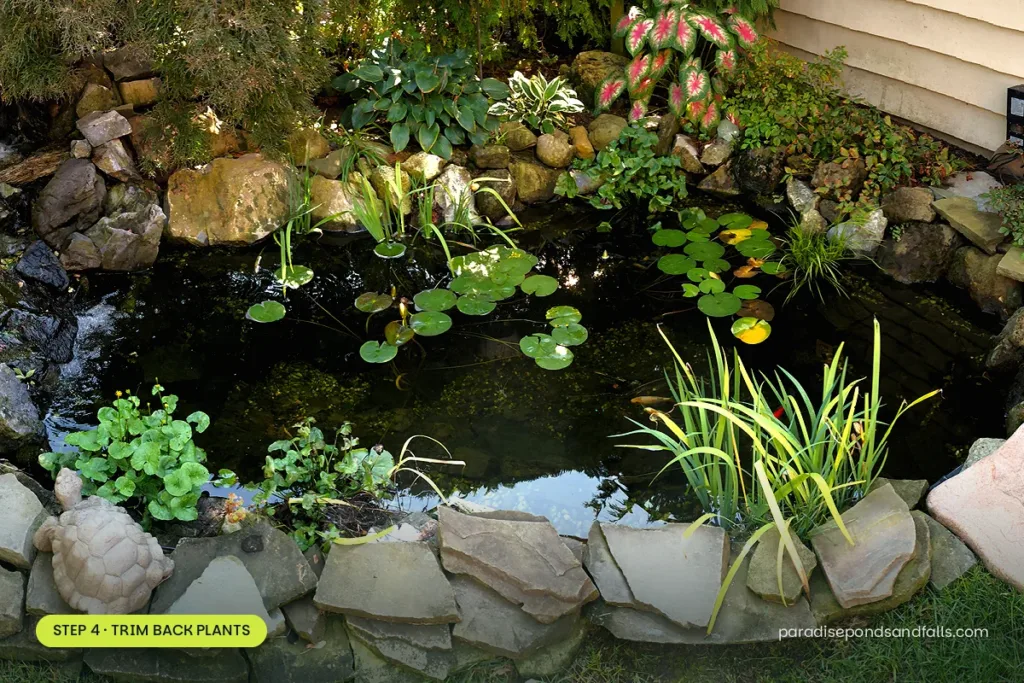 Cut hardy plants back and remove anything that will rot in the water.
Cut hardy marginal plants down to a few inches above the water and remove yellow lily leaves. Move potted water lilies to the deepest part of the pond so their roots stay below the ice line. Tropical plants such as water hyacinth will not survive a Long Island winter, so take them out before they die and rot in the pond.
Decide: keep the pump running or shut it down
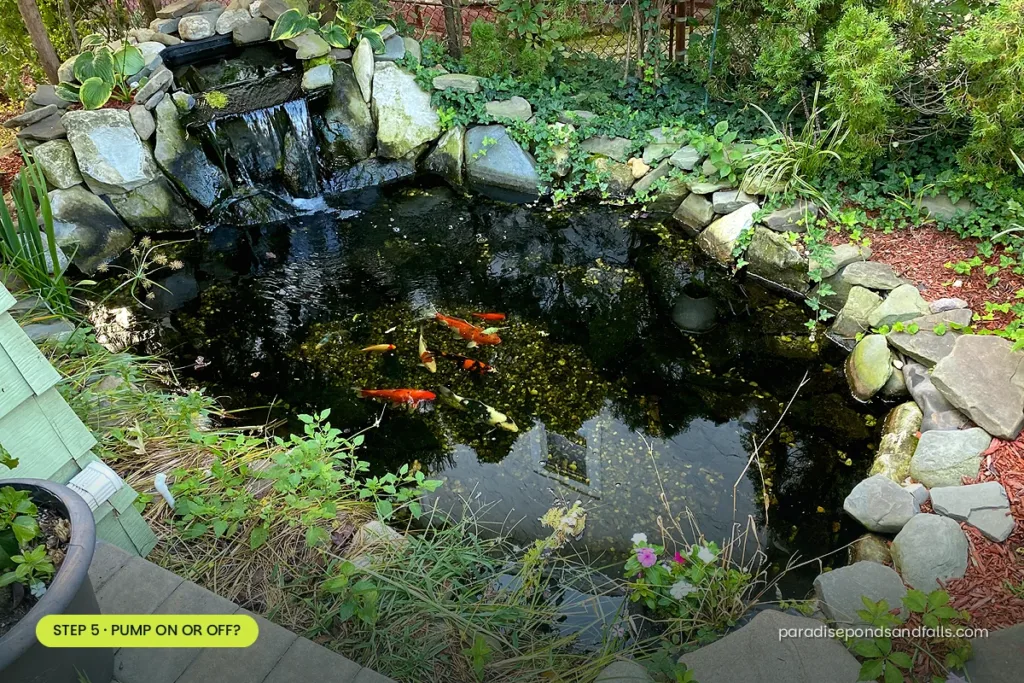 A waterfall can run through winter, but ice can block it and push water out of the pond.
Both choices work on Long Island. The right one depends on your pond and how often you can check on it. Compare them in the pump on or off section below.
Keep a hole open in the ice
This is the step that keeps koi alive. Fish waste and decaying matter give off gases that need to escape. If ice seals the whole surface, those gases stay trapped under the ice. Keep at least one opening all winter with:
- A floating de-icer. Choose one with a built-in thermostat so it only runs when needed. A 100–300 watt unit is enough for most backyard ponds. It does not heat the pond, it just keeps a small hole open.
- An aerator (air pump and air stone). Place the air stone on a shallow shelf about 6 to 12 inches below the surface, not on the bottom. A stone on the bottom mixes the warmer deep water where your koi rest with the cold surface water.
Many ponds on Long Island use both. The aerator keeps the water oxygenated, and the de-icer keeps a hole open during a hard freeze.
Store your equipment the right way
If you shut the pump down, take it out of the pond, rinse it and store it in a bucket of water in a frost-free place such as a garage or basement. Many manufacturers recommend this so the seals do not dry out. Clean the skimmer and the biological filter, take the bulb out of the UV clarifier, and open check valves and drain any above-ground plumbing so it cannot freeze and crack. Rinse filter media in pond water, not tap water, so you keep some of the good bacteria for spring.
Check on the pond through winter
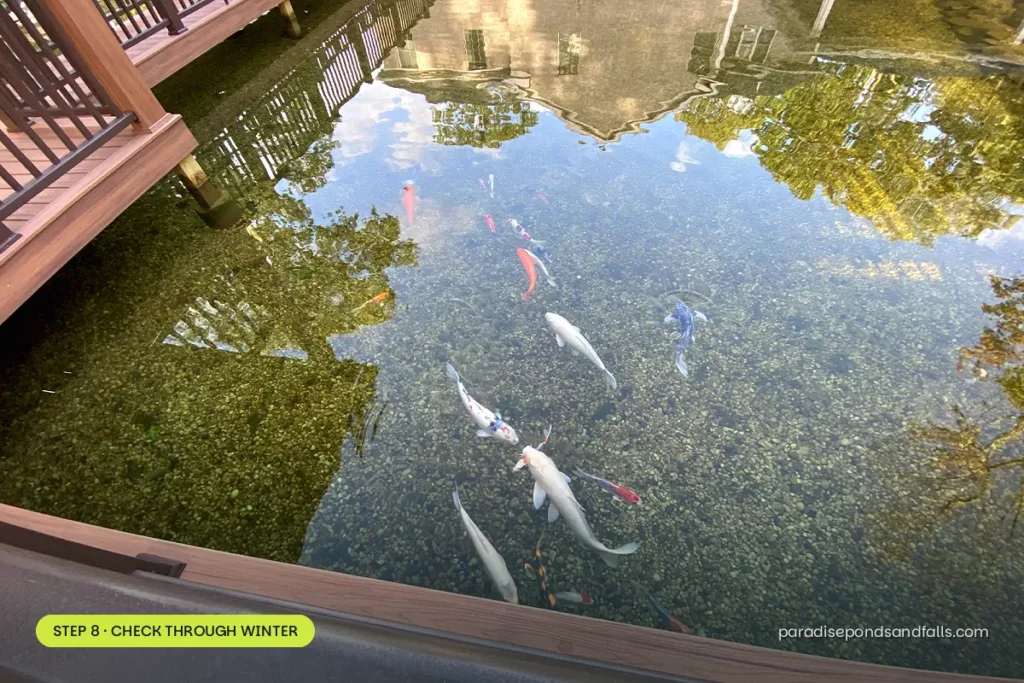 Koi spend the winter resting in the deepest, most stable part of the pond.
Walk out to the pond after every freeze and snowstorm. Make sure the hole in the ice is still open, the de-icer has power and the water level has not dropped. If the pond freezes over completely, do not break the ice with a hammer or shovel. The shock waves stress and can injure fish. Instead, set a pot of hot water on the ice to melt a hole, then fix the de-icer or aerator.
Koi need a deep, stable zone to rest in through winter. A pond with at least 3 feet of depth in one area is the safest for koi in our climate. If yours is shallower, ask us about deepening it or building a koi-ready pond. Not sure how deep is deep enough? See how deep a koi pond should be.
Should you keep your pond running in winter?
There is no single right answer. Here is how the two options compare for a Long Island koi pond.
Keep the pump running
- Moving water helps keep a hole open
- Waterfalls can make beautiful ice shapes
- Filter bacteria stay alive at a low level
- Watch for ice dams that push water out of the pond
- Move the pump up from the bottom so it does not chill the deep water
Shut the pump down
- No risk of ice dams draining the pond
- Less wear on the pump and lower power bills
- You must keep a hole open with a de-icer or aerator
- Store the pump in water in a frost-free place
- The filter restarts slowly in spring
If you travel in winter or cannot check the pond after storms, shutting down is usually the safer choice. Leaving it running suits ponds that someone checks often.
Winter mistakes that hurt koi
✕ Feeding koi when the water is below 50°F ✕ Letting leaves sit and rot on the bottom ✕ Smashing the ice to open a hole ✕ Letting the whole pond freeze over with no opening ✕ Putting the air stone or pump on the deepest part of the pond ✕ Doing a full drain and scrub in late fall ✕ Restarting heavy feeding on the first warm day in MarchLong Island koi pond winter checklist
Late Sept – Oct: pond net installed and emptied weekly October: debris and sludge removed, 10–20% water change with dechlorinator October: plants trimmed, lilies moved deeper, tropicals removed At 60°F: switched to wheat germ food, smaller portions At 50°F: feeding stopped Early Nov: pump decision made, equipment stored or repositioned Before first freeze: de-icer and/or aerator installed and tested All winter: hole in the ice checked after every freeze and snowWaking your pond up in spring
When the water stays above 50°F, usually in April or May on Long Island, start feeding small amounts of wheat germ food every few days. Reinstall the pump and UV, add beneficial bacteria to restart the filter, and clean out anything that settled over winter. Our spring pond cleanout takes care of all of it in one visit, and our weekly pond maintenance keeps the water clear all season. If the water turns green in spring, our guide on how to fix green pond water walks you through it.
Paradise Ponds & Falls has been caring for ponds across Long Island for over 20 years. Our Fall & Winter Prep service starts in October: we clean your skimmer and filters, trim back plants, install de-icers and aerators, remove UV bulbs and open check valves so nothing freezes. We can also net or tent your pond and come back in December to take the nets off.
Koi pond winter FAQs
When should I winterize my koi pond on Long Island?
Net the pond in late September or early October when leaves start to fall, and finish the rest by mid-November. Use the water temperature as your guide: stop feeding below 50°F and have your de-icer or aerator ready before the first hard freeze.
What do koi fish do in the winter?
Koi slow down and rest near the bottom, where the water is warmest and most stable. Their metabolism drops so far that they barely move and do not need food until the water warms up again in spring.
How long can koi go without eating in winter?
Healthy koi can go the whole winter, often three to four months, without food. Once the water is below 50°F they live on the energy they stored in summer and fall, so feeding them can actually make them sick.
Should I turn off my pond pump in winter?
You can do either. Keeping it running helps keep a hole in the ice but can cause ice dams on waterfalls. Turning it off avoids that risk, but then you need a de-icer or aerator to keep the surface open.
Can I leave my pond pump in the pond all winter?
Yes if it keeps running, but raise it off the bottom so it does not mix the cold surface water into the deep area where koi rest. If you shut it off, take it out and store it in a bucket of water somewhere frost-free.
Do I need a heater for my koi pond?
No. Koi do not need heated water on Long Island. A small floating de-icer only keeps a hole open in the ice for gas exchange. It does not, and should not, heat the whole pond.