

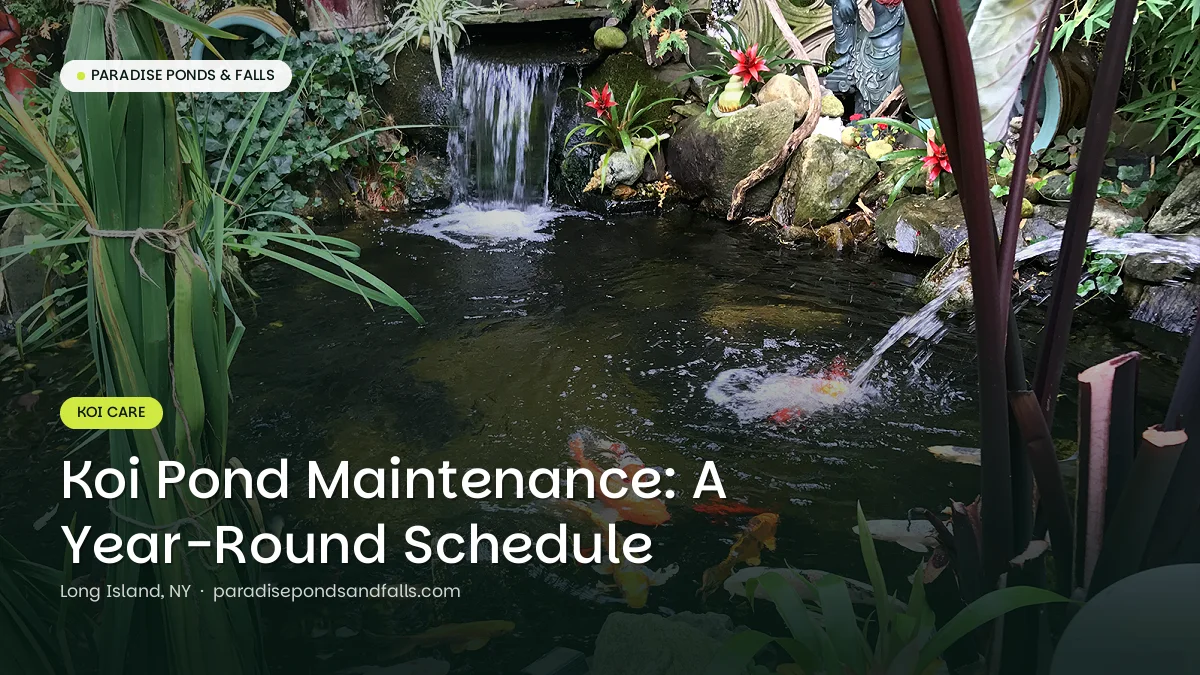
Koi are hardy fish, but they live in a small, closed body of water that depends on you. Most koi problems on Long Island come back to the same few things: water quality, feeding at the wrong temperature and skipped seasonal jobs. This koi pond maintenance schedule puts everything in order, from the first warm week in spring to the last check under the ice.
Koi pond maintenance comes down to clean filters, steady water quality and feeding by water temperature. Test ammonia, nitrite and pH every week or two in season, keep ammonia and nitrite at zero, feed only above 50°F, do small partial water changes with dechlorinated water, and handle the big jobs by season: a spring clean-out, summer aeration and fall winterizing.
Koi care calendar for Long Island
Go by the water temperature, not the date. A cheap pond thermometer is the most useful koi tool you can own.
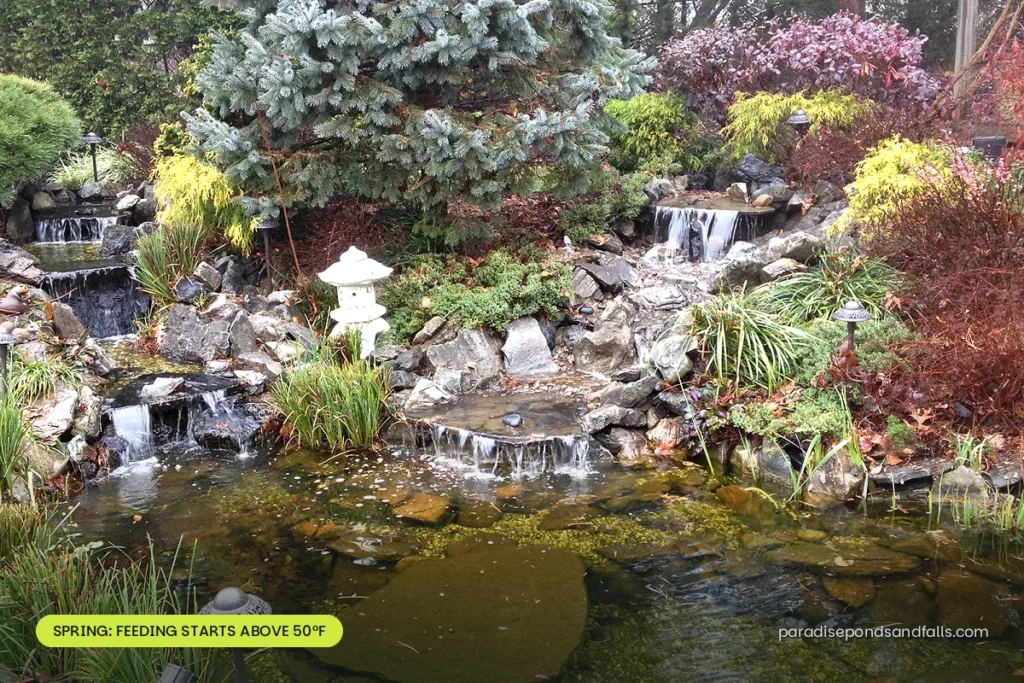 When the water stays above 50°F in spring, koi start looking for food again. Start slowly.
Water test targets for koi
Most koi illness starts with water quality, so test before you treat anything. Enter your results from a pond test kit:
Ammonia and nitrite come from fish waste and should be removed by your biological filter. If they are rising, the filter is overloaded, too new or was cleaned too hard.
Warning signs of a sick koi
Watch your koi for a minute or two every day. Early signs are easy to miss:
Behavior
Gasping at the surface or crowding at the waterfall Flashing: darting and rubbing against rocks Sitting on the bottom with fins clamped in warm weather Hiding alone or ignoring food above 60°FBody
Red streaks in the fins or red, inflamed patches Ulcers, open sores or raised scales White spots, a gray film or cloudy eyes Frayed or ragged finsFish-safe cleaning rules
Cleaning a koi pond is about removing waste without upsetting the fish or the bacteria.
Partial water changes: about 10 percent a week in summer, always with a dechlorinator in the new water. Rinse filter media in pond water, never under the tap, and never all of it at once. No household cleaners or soap near the pond, on nets, buckets or rocks. Read algae treatment labels; some are harmful to koi or crash oxygen as the algae die. Remove sludge little and often with a pond vacuum, and leave the full drain-down for the spring clean-out.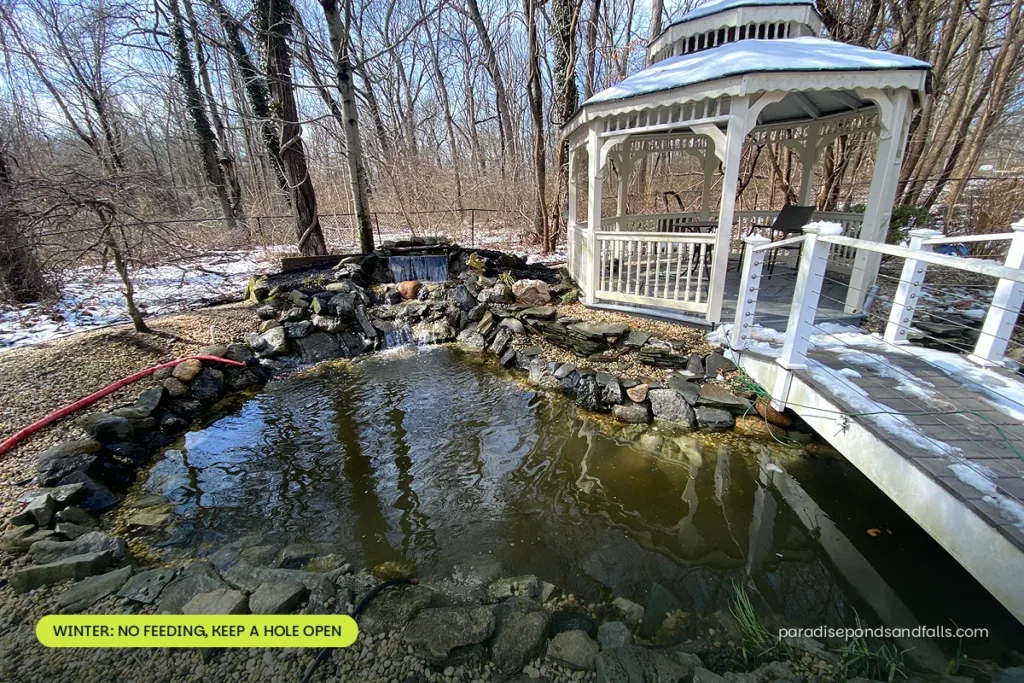 In winter, koi rest in the deep zone. Your job is to keep a hole open and leave them alone.
Rather let us handle it?
Our maintenance visits cover the filters, water quality, plants and equipment, so your koi stay healthy without the weekly chores.
Weekly visits
Best for larger or heavily stocked koi ponds and ponds under trees.
See Weekly MaintenanceBi-weekly visits
A visit every two weeks; you empty the skimmer net and top off in between.
Compare PlansSpring and fall only
A spring clean-out and fall winterizing, with you handling the weekly jobs.
Get a Free QuoteRelated guides: how to winterize a koi pond, why koi ponds need an aerator, the best fish for an outdoor pond and protecting koi from herons. Questions? Call 516-334-1122.
Koi pond maintenance FAQs
How often should I test my koi pond water?
Every week or two from spring to fall, and any time fish act strangely. Test ammonia, nitrite and pH at least; nitrate and KH are useful extras.
When should I stop feeding koi on Long Island?
Switch to a low-protein wheat germ food when the water drops below about 60°F, and stop feeding completely below 50°F, usually by early November. Start again in spring once the water stays above 50°F.
How often should I do water changes in a koi pond?
About 10 percent a week in the warm months is a good habit, with tap water treated with a dechlorinator. Bigger changes are for emergencies such as an ammonia spike.
What water parameters do koi need?
Ammonia and nitrite at 0 ppm, nitrate under about 40 ppm, pH between 7.0 and 8.5 and steady, and KH around 100 ppm or higher to keep the pH from swinging.
Do you offer koi pond maintenance near me?
Yes. Paradise Ponds & Falls maintains koi ponds across Nassau and Suffolk County with weekly, bi-weekly and seasonal plans. Call 516-334-1122 or request a free quote.