

A pond vacuum is the closest thing a pond has to a mid-season reset. It lifts the muck off the bottom without draining a drop more than it has to. But it has limits, and knowing them saves you from buying the wrong tool or vacuuming every weekend for a problem it cannot fix.
A pond vacuum sucks loose muck, fallen leaves and fish waste off the bottom so you can clean a pond without draining it. It works well for light, regular cleaning. It will not fix deep, packed sludge, debris trapped under rocks and gravel, clogged filters or leaks; those need a full clean-out. Every session removes some water, so top off with dechlorinated water afterwards.
What a pond vacuum can and cannot fix
✓ Good for
Loose muck and fish waste sitting on top of the gravel Leaves and twigs that sank before you could net them Light clean-ups between yearly clean-outs Spot cleaning a corner where debris always collects✗ Not enough for
Inches of packed sludge built up over years Debris trapped under rocks and deep in gravel Dirty filters, a weak pump or green water from poor filtration Leaks, sunken edges or anything that needs the pond empty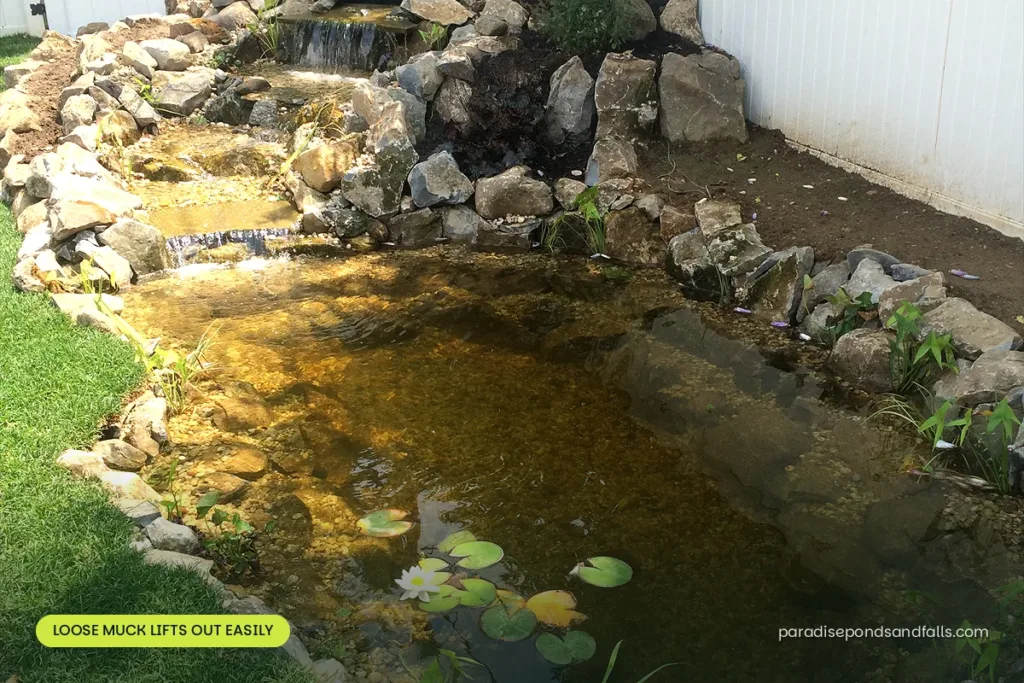 Fine debris sitting on top of the stones is exactly what a vacuum is for.
Types of pond vacuums compared
Pond vacuums range from hose-powered gadgets to the high-flow units pond services use.
How to vacuum a pond without stressing your fish
Six habits make vacuuming safe for fish and for the bacteria that keep your water clear.
Pick a cool time of day
Morning or evening, not a hot afternoon, when warm water already holds less oxygen.
Keep the pump and aerator running
Stirred-up muck uses oxygen. Moving water keeps the fish comfortable while you work.
Work slowly, nozzle just above the gravel
Skim the loose layer off the top. Digging into the gravel clouds the water and removes the bacteria living there.
Clean one section at a time
Remove no more than about 10 to 20 percent of the water in a session, then come back another day for the rest.
Send the dirty water to the garden
Pond water full of fish waste is good fertilizer for lawns and beds. Keep it away from storm drains and the pond itself.
Top off and add bacteria
Refill with tap water treated with a dechlorinator, then add beneficial bacteria to replace what you removed.
💡 Fish often follow the nozzle out of curiosity. Move slowly and keep the suction end where you can see it.Pond vacuum vs a full clean-out
Most ponds need both: a vacuum for light work through the season and one full clean-out a year.
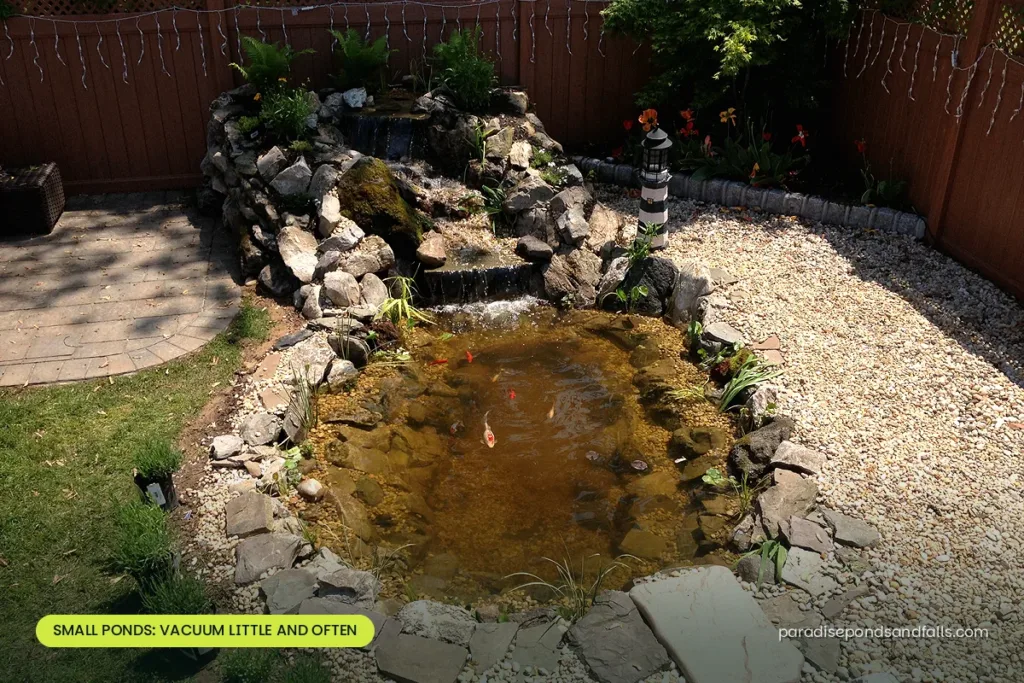 In a small pond, a few minutes with a vacuum every few weeks keeps muck from building up.
When to call a pro instead
- The vacuum clogs every few seconds on leaves and packed sludge.
- The water stays murky or smells after you vacuum.
- It has been more than a year since the pond was fully cleaned.
- The pond is large or deep, beyond what a homeowner vacuum can reach.
- You also need filter, pump or leak work, which is easiest with the pond drained.
Paradise Ponds & Falls handles clean-outs and regular pond maintenance across Nassau and Suffolk County, including vacuuming between visits.
Also useful: our spring clean-out service, how a pond skimmer stops leaves before they sink, and how to fix green pond water.
Pond vacuum FAQs
Can I clean a pond without draining it?
Yes, for light cleaning. A pond vacuum, a long-handled net and regular skimmer and filter care keep most ponds clean through the season. Heavy sludge and repairs still need a full clean-out with the pond drained.
How often should I vacuum my pond?
Every few weeks from spring to fall is plenty for most ponds, plus once in late fall after the leaves are down. Vacuum one section at a time rather than the whole pond at once.
Will a pond vacuum hurt my fish?
Not if you work slowly in cool weather, keep the pump and aerator running and watch where the nozzle goes. Fish move out of the way, though curious ones may follow it.
Does a pond vacuum remove string algae?
Some, but long strands clog the hose. Pull or twirl string algae out with a brush or stick first, then vacuum the loose bits.
Should I vacuum the gravel in an ecosystem pond?
Lightly. The gravel holds beneficial bacteria, so skim the loose muck off the top rather than digging in. The deep cleaning happens during the yearly clean-out.