

When the waterfall goes quiet, it is tempting to buy a new pump right away. But a pond pump not working is often a 15-minute fix: a clogged intake, a jammed impeller, a tripped outlet or low water. This guide matches what your pump is doing to the most likely cause, so you can fix it or know when it really needs replacing.
If your pond pump is not working, first check the power: reset the GFCI outlet and test it with a lamp. If the pump hums but moves no water, unplug it and clear debris from the intake and impeller, then purge any trapped air. If it runs with weak flow, clean the skimmer net, filter pads and intake screen and check the pipe for clogs. A pump that keeps tripping the outlet or won't start with good power usually needs replacing.
What is your pond pump doing?
Find the card that matches your pump. Each one lists the most likely cause and what to try first.
Won't turn on at all
Likely cause: a tripped GFCI outlet or breaker, a timer switched off, or the pump's thermal cut-off after running dry.
Try: reset the GFCI, plug a lamp into the same outlet, and let an overheated pump cool for 30 minutes.Hums but moves no water
Likely cause: a jammed impeller (a stone, twig or snail shell), air trapped in the pump, or a seized motor.
Try: unplug, clear the impeller, then tilt the pump underwater to let the air out.Runs, but the flow is weak
Likely cause: a full skimmer net, dirty filter pads, a clogged intake screen or pipe, or a worn impeller.
Try: clean the skimmer and filter pads in pond water, rinse the intake and check the pipe.Starts, then shuts off
Likely cause: the thermal overload protecting the motor from low water, a clog or hot weather.
Try: top up the pond, clear debris and make sure the pump sits fully under water.Trips the GFCI outlet
Likely cause: water getting into the cord or motor, or a damaged cord. This is a safety problem, not a clog.
Do this: stop using the pump and replace it. Do not bypass the GFCI.Loud, rattling or grinding
Likely cause: grit or gravel in the impeller housing, a worn impeller or bearings, or the pump starving for water.
Try: clean the housing, check the impeller for wear and keep the water level up.How to clean a pond pump impeller in 15 minutes
Most submersible pond pumps open the same way. Check your pump's manual for the exact clips or screws, then follow these steps.
Unplug and lift the pump out
Unplug first, then lift the pump by its handle or a rope, not the cord. If it sits in a skimmer, empty the net and remove any filter mats above it.
Clean the intake screen or cage
Pull off string algae, leaves and muck. Rinse it in a bucket of pond water so you do not wash off the good bacteria living around the filter.
Open the impeller cover
Remove the volute or front cover. Take out the impeller and look for stones, snail shells, hair-like algae and grit wrapped around the shaft.
Check the impeller for wear
Spin it by hand. It should turn freely and the blades should be whole. A chipped or wobbly impeller is a cheap replacement part on most pumps and brings the flow back.
Reassemble, submerge and purge the air
Put it back together, lower it into the water and tilt it to let trapped air escape before you plug it in. Then check the flow at the waterfall.
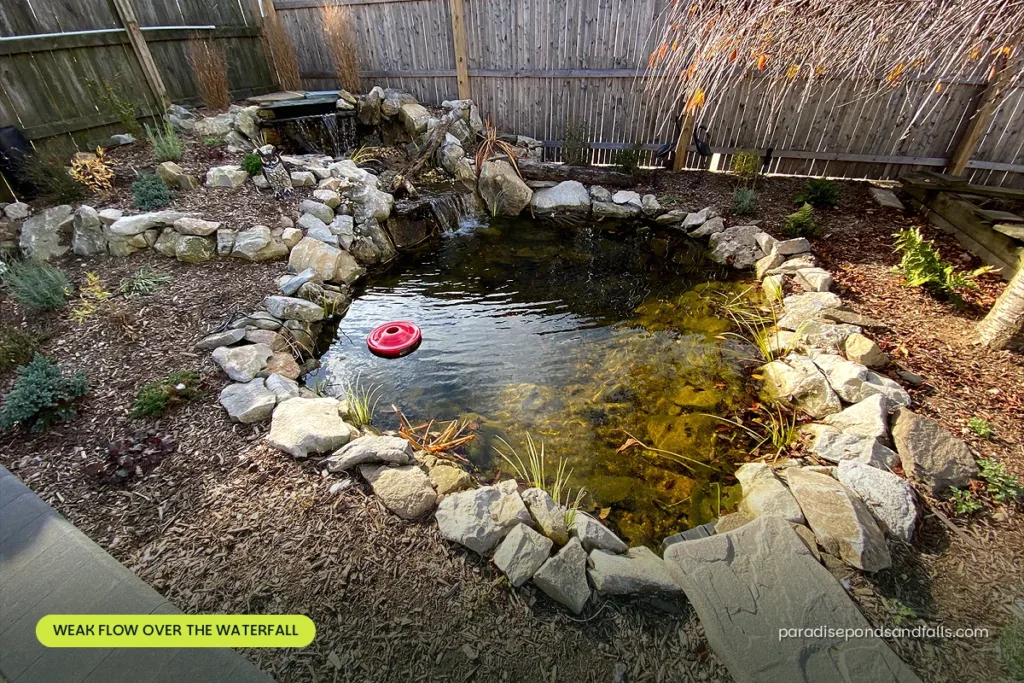 If the waterfall is only trickling, check the skimmer and intake before you blame the pump.
Is it the pump or the plumbing?
Here is a simple test our crew uses. Take the pump out, set it in a large bucket or tub of water and run it for a moment with a short piece of hose, or with nothing attached.
If it pumps strongly in the bucket, the pump is fine and the problem is in the system: a clogged pipe, a stuck check valve, a full biological filter or a kinked hose. If it is weak or silent in the bucket too, the pump itself is the problem.
Repair or replace your pond pump?
Many pump problems are cleaning jobs. Use this table to decide when a repair makes sense and when a new pump is the better choice.
Replacing it? Size the new pump to the pond, not just to the old pump. A pump that is too small gives a weak waterfall and poor filtration, and one that is too big wastes power every month. If you are not sure of your pond's volume, our koi pond size calculator gives a quick estimate in gallons.
 Fish depend on moving water for oxygen, especially on warm nights.
Pond pumps in a Long Island winter
Cold weather causes its own pump problems. If you shut the pump down for winter, take it out, clean it and store it in a bucket of water somewhere frost-free so the seals do not dry out. If you keep it running, raise it off the bottom and watch the stream for ice dams that can drain the pond and leave the pump running dry. Our guide on how to winterize a koi pond covers both options.
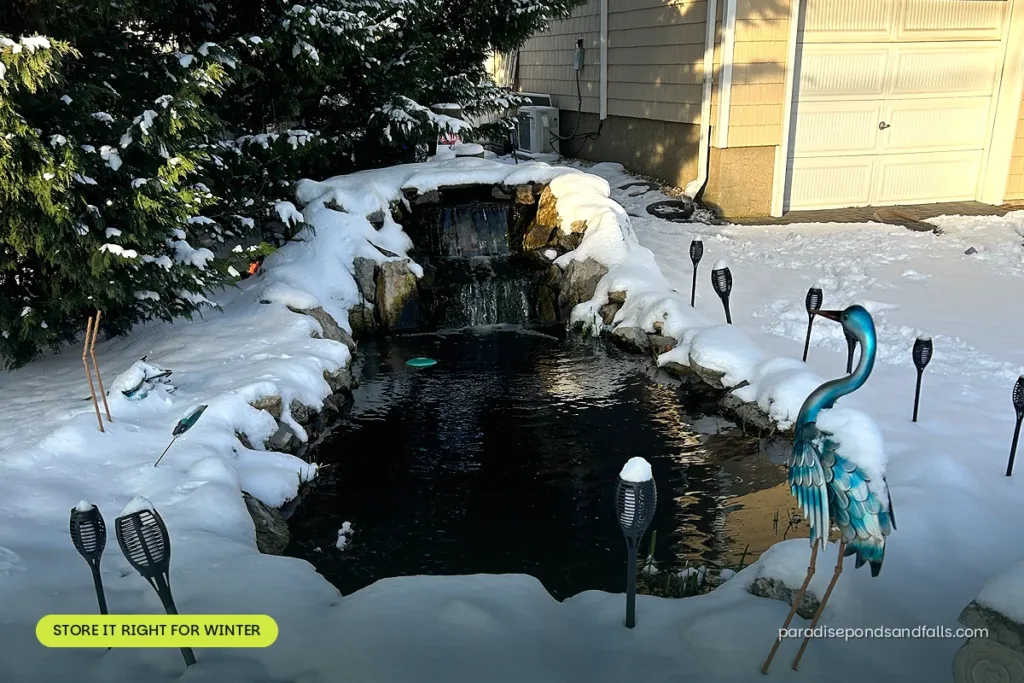 A waterfall can run through a Long Island winter, but only if someone checks it after every freeze.
How to prevent pond pump problems
Weekly: empty the skimmer net, more often while leaves are falling Every few weeks: rinse filter pads and the intake screen in pond water Always: keep the water level up so the pump never runs dry After storms: check the intake and stream for leaves and twigs Each spring: open the pump, check the impeller and test the GFCI outlet Each fall: decide to store it or keep it running, and set it up for winterParadise Ponds & Falls repairs and replaces pond and waterfall pumps across Nassau and Suffolk County. We find out whether it is the pump, the plumbing or the filter, size the right replacement and keep your fish safe while we work.
If the pump keeps running dry because the water level keeps falling, check whether your pond is leaking. And if you would rather not clean pumps and filters yourself, our pond maintenance visits take care of it all season.
Pond pump FAQs
Why is my pond pump humming but not pumping water?
Most often the impeller is jammed by a stone, twig or snail shell, or air is trapped inside the pump. Unplug it, clear the impeller and tilt the pump underwater to let the air out. If it still hums with a clean, free-spinning impeller, the motor is failing.
Can a pond pump run dry?
No. Submersible pond pumps are cooled by the water around them. Running dry overheats the motor, and even with a thermal cut-off, repeated overheating shortens the pump's life. Keep the water level up and check the stream for leaks or ice dams.
Should I run my pond pump 24 hours a day?
Yes, during the season. Your filter bacteria and your fish need constant flow and oxygen, and turning the pump off at night is a common cause of green pond water.
Why does my pond pump keep shutting off?
Most pumps have a thermal overload that switches them off when they overheat. Low water, a clogged intake or very hot weather can trigger it. Let the pump cool, fix the cause, and it should restart on its own.
How long does a pond pump last?
It depends on the pump quality and how it is cared for. Regular cleaning, a steady water level and proper winter storage add years. Running dry, clogged intakes and freezing in the pond shorten its life.
Is it safe to put my hand in the pond with the pump plugged in?
No. Always unplug the pump before touching it or reaching into the water. Pond pumps should only run on a GFCI-protected outdoor outlet, and a pump that trips the GFCI should be replaced, not bypassed.