

Koi are big fish that eat a lot and produce a lot of waste, so a koi pond lives or dies by its filtration. The good news is that every system, from a simple skimmer and waterfall filter to a bottom-drain setup, does the same three jobs. Here they are in plain words, plus how to choose and size a koi pond filtration system for your fish.
A koi pond filtration system does three jobs. Mechanical filtration catches leaves and solid waste; biological filtration uses beneficial bacteria to turn toxic ammonia from fish waste into much safer nitrate; and a UV clarifier kills the free-floating algae that turn water green. For most koi ponds, plan to move the whole pond through the filters about once an hour, and choose a filter rated for 1.5 to 2 times your pond's gallons.
The three stages of pond filtration
Biological filtration matters most for koi. Ammonia and nitrite harm fish even at low levels, and koi produce plenty of both. The bacteria that remove them take weeks to build up, especially in cool spring water, which is why new ponds and freshly cleaned filters need time, and why filter media should never be rinsed with chlorinated tap water.
Koi pond filter types compared
Most backyard koi ponds on Long Island use one of these setups, often with a UV clarifier added.
 Even a small or raised pond needs all three stages once fish live in it.
How to size filtration for your koi
Filter boxes are usually rated for lightly stocked ponds, so koi ponds need more capacity than the label suggests. Enter your pond and fish below.
- Turnover: move the whole pond through the filters about once an hour for koi, every one to two hours for a water garden.
- Filter rating: a common rule of thumb is 1.5 to 2 times your pond's gallons for koi.
- UV clarifier: match the pond volume and the maker's flow limit. Water rushing past the bulb too fast is not exposed long enough.
- Fish load: plan on about 250 gallons per adult koi. Our koi pond size calculator works out your pond's capacity.
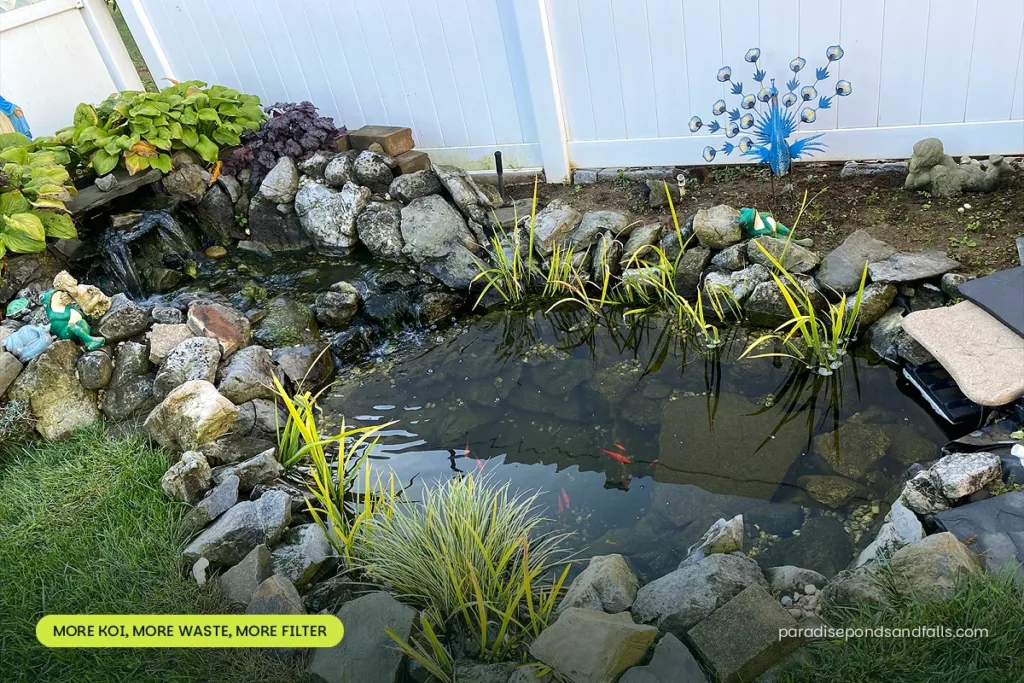 Koi grow fast. Size the filter for the fish they will become, not the fish you buy.
Filtration mistakes we fix most often
Paradise Ponds & Falls designs and upgrades koi pond filtration across Nassau and Suffolk County: skimmers, waterfall biofilters, UV clarifiers and bottom drains, sized to your fish.
Related reading: how to fix green pond water, why koi ponds need an aerator, how an ecosystem pond filters itself, and our pond clean-out process.
Koi pond filtration FAQs
What is the best filter for a koi pond?
There is no single best brand. A skimmer plus a waterfall biofilter suits most backyard koi ponds; large or heavily stocked koi ponds do best with a bottom drain feeding a bead or gravity filter. Most benefit from a UV clarifier as well.
Does a koi pond need a UV clarifier?
Not always, but it is the most reliable way to stop green water. It works best alongside good biological filtration, and its bulb should be replaced every spring.
How often should a pond filter be cleaned?
Empty the skimmer net weekly, more often in fall, and rinse filter mats when the flow drops, usually every few weeks in summer. Rinse biological media lightly, in pond water, only when it is clogged.
How long does a new pond filter take to work?
A biological filter usually needs about four to six weeks to build up enough bacteria, longer in cool water. Adding beneficial bacteria and adding fish gradually helps it get there.
How big a filter do I need for my koi pond?
Choose a filter rated for 1.5 to 2 times your pond's volume and a pump that moves the whole pond through it about once an hour. Heavily stocked ponds need the upper end.
Should I turn my pond filter off in winter?
Many Long Island ponds shut the pump and waterfall filter down once the water stays below about 50°F, when the bacteria slow down anyway. If you do, keep an aerator running and restart the filter in spring.