

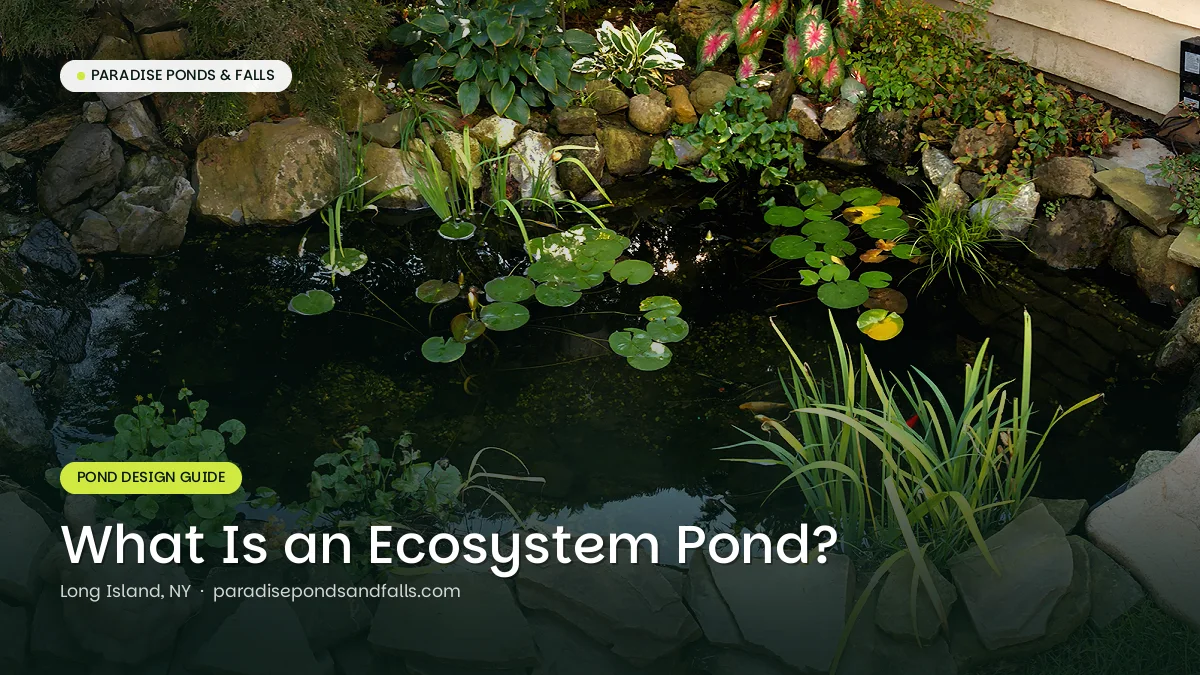
Most of the ponds we build on Long Island are ecosystem ponds. Homeowners ask for them because they want clear water without fighting the pond every weekend. But the name gets used loosely, so this guide explains what an ecosystem pond actually is, the five parts that make it work, how it compares with a koi pond built around a bottom drain, and who each one suits.
An ecosystem pond is a pond designed to work like a natural one. A skimmer, a biological filter, rocks and gravel, aquatic plants, fish and beneficial bacteria all work together, so the pond cleans itself with a small pump and no harsh chemicals. It needs less routine work than a bare-liner pond, usually just emptying the skimmer, adding bacteria and one spring clean-out a year.
How an ecosystem pond works
The whole pond is one loop. Water is cleaned a little at every stop along the way:
- The skimmer at the surface pulls in leaves, pollen and floating debris before they sink and rot.
- The pump inside the skimmer sends the water through a pipe to the top of the waterfall.
- The biological filter under the waterfall holds filter media where bacteria break down fish waste.
- The waterfall and stream add oxygen as the water tumbles back down.
- Rocks, gravel and plants in the pond finish the job: bacteria live on every surface and plants take up the leftover nutrients that algae would feed on.
The 5 parts of an ecosystem pond
Take one away and the balance tips, usually toward green water or muck. That is why we plan all five together during the design.
A skimmer for the surface
The skimmer box sits at the pond edge and collects floating debris in a net or basket. It also hides and protects the pump, so you never have a pump sitting in the bottom of the pond pulling up muck.
A biological filter at the waterfall
At the top of the waterfall, a filter box packed with media gives beneficial bacteria a large, oxygen-rich home. This is where most of the ammonia from fish waste is turned into less harmful compounds. It doubles as the start of the waterfall, so it hides behind rocks and plants.
Rocks and gravel over the liner
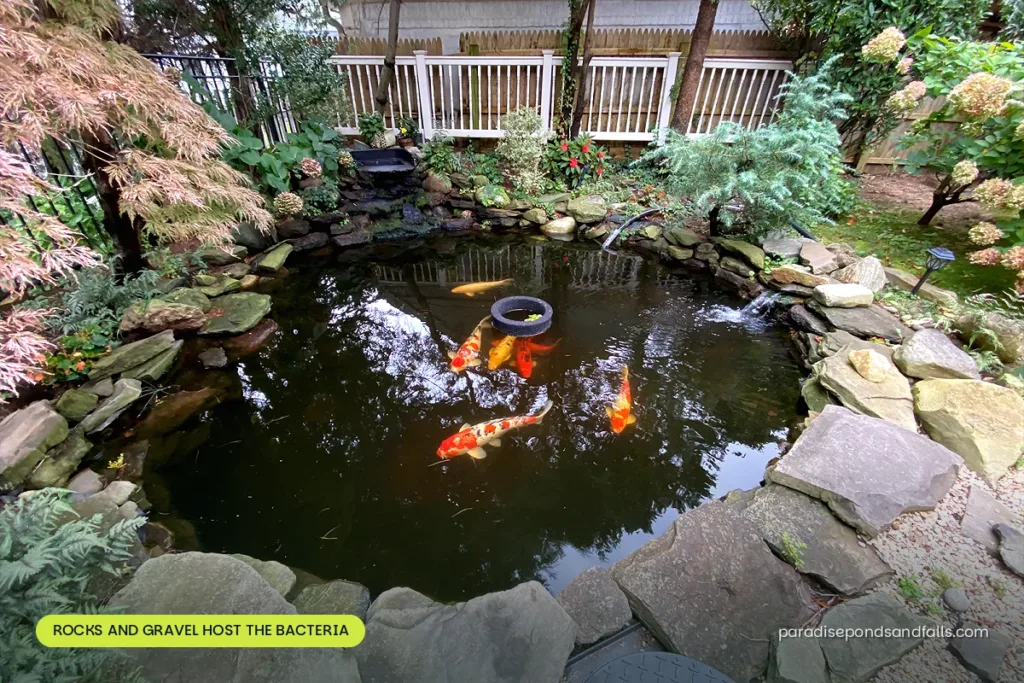 Every rock and pebble is surface area for beneficial bacteria.
Rocks cover the liner and protect it from sunlight and sharp objects, and a thin layer of gravel on the bottom gives bacteria a huge surface to live on. It also makes the pond look like it belongs in nature instead of a black plastic tub.
Aquatic plants
Lilies shade the water and keep it cooler, while marginal plants on the shelves soak up nitrates and phosphates. Every nutrient a plant uses is one that algae cannot. A well-planted pond is the best long-term defense against green pond water.
Fish and beneficial bacteria
Fish are part of the system, not just decoration. They graze on algae and eat mosquito larvae, and their waste feeds the plants once bacteria have broken it down. Adding beneficial bacteria through the season keeps that cycle strong, especially after a clean-out or in spring.
Ecosystem pond vs. koi pond with a bottom drain
The big difference is how each one deals with waste that sinks. An ecosystem pond breaks it down where it lands. A dedicated koi pond pulls it out through a drain in the floor.
What about the gravel debate? Serious koi keepers often avoid gravel because uneaten food and waste can settle between the stones, and gravel gets in the way of a bottom drain. That is a fair point for heavily stocked koi ponds. For most backyard ponds, a thin layer of gravel, a sensible number of fish and a yearly clean-out keep the bottom healthy, and the extra bacteria do a lot of the work for you.
Is an ecosystem pond right for you?
A great fit if you want
- A natural-looking pond with rocks, a waterfall and plants
- Goldfish or a modest number of koi
- Frogs, birds and dragonflies visiting
- Low weekly upkeep and no harsh chemicals
- A smaller pump and lower running costs
Consider a koi system if you want
- A large collection of big koi
- A very heavy fish load for the pond size
- A bare, easy-to-see bottom to show off fish
- No yearly drain-down clean-out
- Bottom drains and more filtration equipment
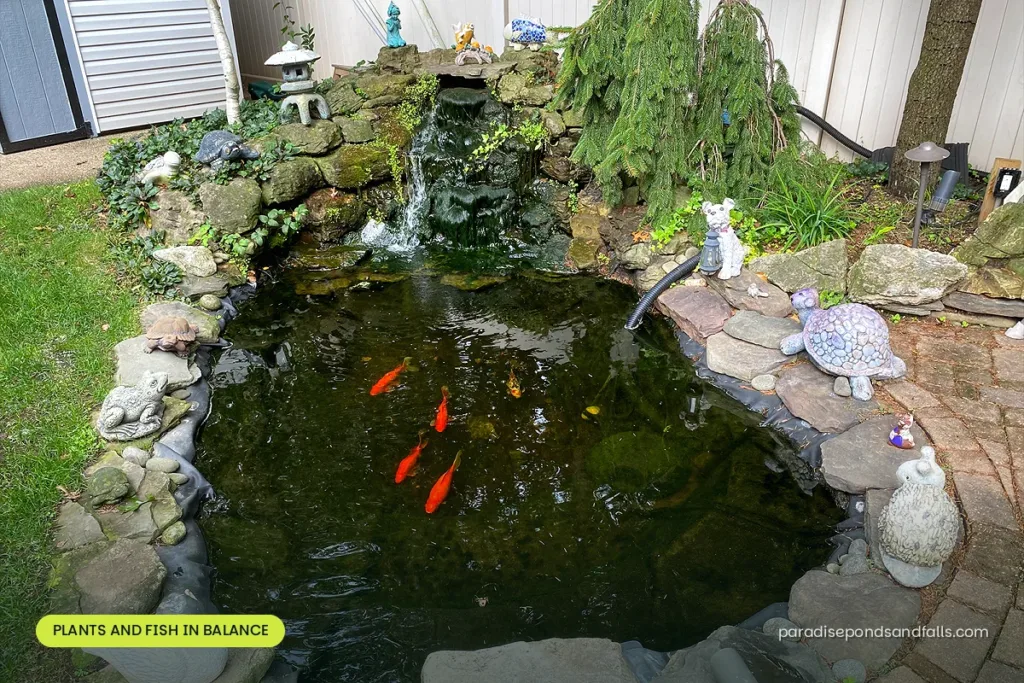 Plants, fish and a waterfall working together keep the water clear.
Caring for an ecosystem pond on Long Island
"Low maintenance" does not mean no maintenance. Here is what a year looks like for an ecosystem pond in our climate:
Spring: a full clean-out that removes winter muck, rinses the rocks and restarts the bacteria. Our spring pond cleanout covers it in one visit. Summer: empty the skimmer net weekly, add bacteria, top up with dechlorinated water and keep plants trimmed. Fall: net the pond before the leaves drop and cut plants back. See how to winterize a koi pond. Winter: keep a hole open in the ice with a de-icer or aerator and check the pond after every freeze.Why it has to be designed in from the start
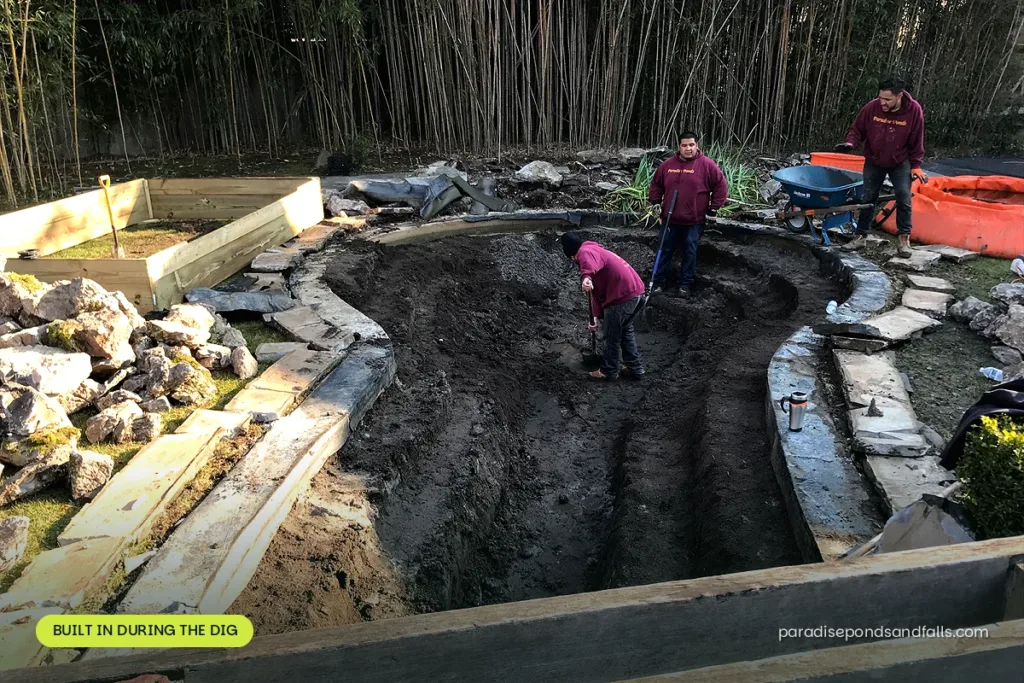 The skimmer, filter, shelves and depth are all set during the dig.
You cannot turn a bare hole into an ecosystem pond by adding plants later. The skimmer has to sit level at the right height, the biological filter has to sit at the top of the waterfall, and the shelves for plants and the deep zone for fish are dug in before the liner goes down. For koi, that deep zone needs to be at least 3 feet on Long Island; see how deep a koi pond should be.
Have an old pond, or even an unused swimming pool? Many can be rebuilt as ecosystem ponds. Our pool to pond conversion turns an old pool into a natural pond with the same five parts.
Paradise Ponds & Falls designs and builds ecosystem ponds with waterfalls across Nassau and Suffolk County. We plan the skimmer, filter, depth and planting together so the pond stays clear and easy to care for.
Looking for ideas first? Browse our backyard waterfall ideas from real projects, or see how our pond maintenance keeps an ecosystem pond in balance all season.
Ecosystem pond FAQs
Do ecosystem ponds need to be cleaned?
Yes, but less often. Plan on emptying the skimmer net, adding bacteria and topping up through the season, plus one full clean-out each spring to remove the muck that settles over winter.
Can you keep koi in an ecosystem pond?
Yes. Many ecosystem ponds keep koi happily, as long as the fish load fits the pond size, the filter is sized for the fish and the deep zone is at least 3 feet on Long Island. Very large koi collections do better in a pond built around bottom drains.
Why do ecosystem ponds have gravel on the bottom?
Gravel gives beneficial bacteria a large surface to live on, protects the liner from sunlight and makes the pond look natural. Keep it to a thin layer so waste cannot build up deep between the stones, and rinse it during the spring clean-out.
Do ecosystem ponds use chemicals?
Not harsh ones. They rely on beneficial bacteria, plants and natural water treatments. The one product every pond needs is a dechlorinator whenever you top up with tap water.
Will an ecosystem pond attract mosquitoes?
No. Mosquitoes need still water, and an ecosystem pond keeps water moving through the skimmer and waterfall. Fish also eat any larvae.
Can an existing pond be turned into an ecosystem pond?
Often, yes. Adding a skimmer, a biological filter, rocks, gravel and plants can convert many older ponds, but it depends on the liner, the depth and the shape. It is usually done as a rebuild during a clean-out.