

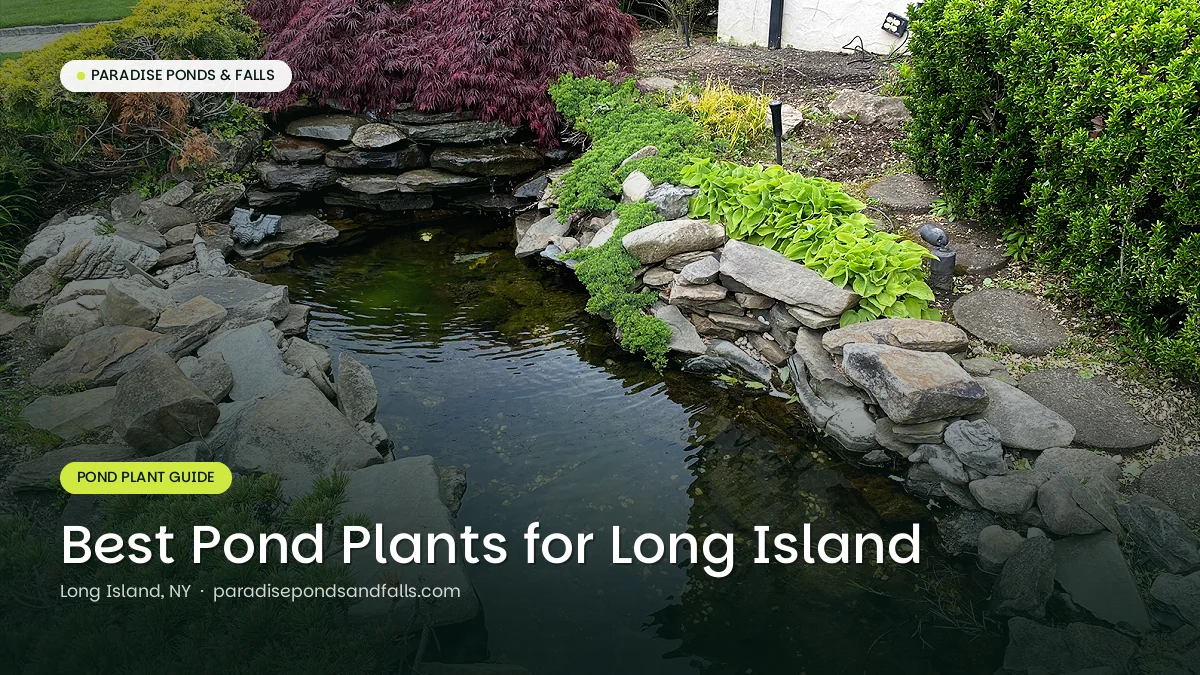
Plants are what turn a hole full of water into a living pond. They clean the water, shade the fish and soften the rocks. But the plant labeled "pond plant" at the garden center is not always right for Long Island, and a few common ones are actually banned in New York. Here are the best pond plants for our climate, sorted by where they grow in the pond.
The best pond plants for Long Island are hardy, mostly native plants: pickerelweed, blue flag iris, marsh marigold, cardinal flower, arrowhead and soft rush around the edges, hardy water lilies in deeper water, and hornwort as an underwater oxygenator. Aim to cover 40 to 60% of the water surface. Avoid yellow iris, parrot-feather, fanwort and Brazilian waterweed, which are prohibited in New York.
Why every pond needs plants
Plants take up the nitrates and phosphates that fish waste leaves behind, the same nutrients algae feed on. Lilies shade the water so it stays cooler and less green, fish hide under the leaves, and marginal plants hide the liner and make the pond look natural. In an ecosystem pond, plants are part of the filter.
💡 Aim to cover 40 to 60% of the water surface with lily pads and edge plants. Less than that and algae get the sunlight; much more and you lose the view of your fish.Pond planting zones at a glance
Every pond plant has a preferred water depth. Placing it at the right depth is the difference between a plant that thrives and one that rots.
Best marginal plants for the edges
Marginals grow on the shallow shelves with their roots in water and their leaves in the air. These six are all native to the Northeast and hardy through a Long Island winter.
Pickerelweed
Glossy heart-shaped leaves and spikes of blue flowers from midsummer into fall. Bees love it, and it is one of the most reliable marginals you can plant.
Blue flag iris
Sword-like leaves and purple-blue flowers in late spring. Plant it instead of yellow flag iris, which is prohibited in New York.
Marsh marigold
Bright yellow flowers in early spring, often the first color around the pond. It likes wet soil or very shallow water at the edge.
Cardinal flower
Tall scarlet spikes in late summer that bring in hummingbirds. Grow it in wet soil right at the water line rather than deep in the pond.
Arrowhead
Arrow-shaped leaves and small white flowers in summer. It spreads steadily, so keep it in a pot on the shelf.
Soft rush
Upright green stems that add texture all season and hold their shape well into winter. Great for a natural, grassy look between rocks.
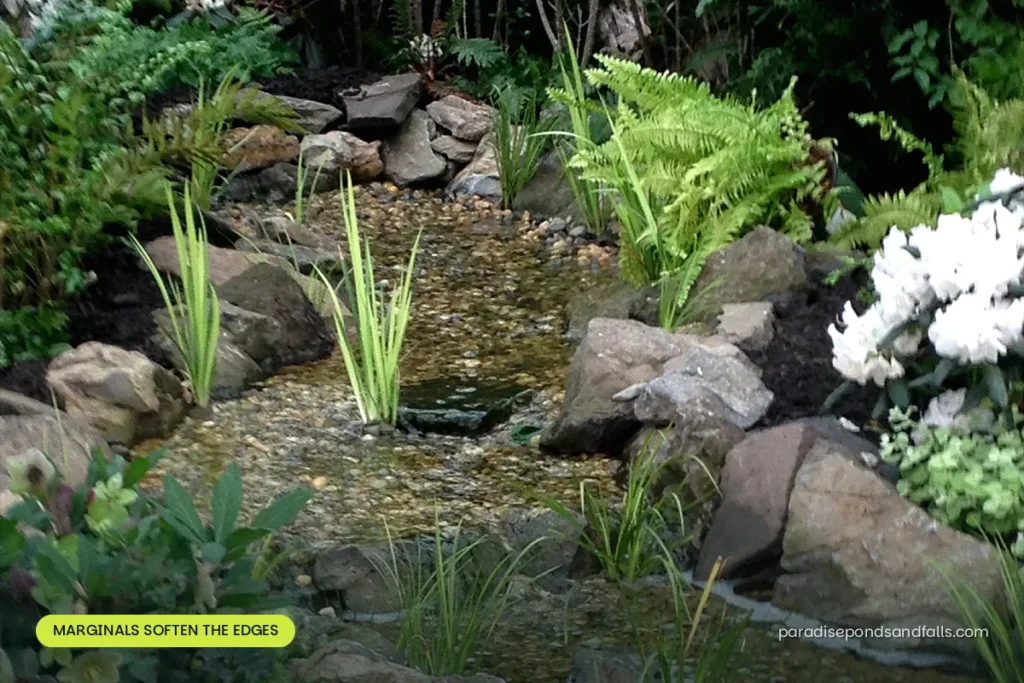 Marginal plants tucked between rocks hide the liner and filter the water.
Best deep-water plants: hardy water lilies
Hardy water lilies are the stars of the deeper water. Their pads shade the pond and give fish cover, and they bloom all summer in white, pink, red and yellow. Grow them in pots set so there are roughly 12 to 24 inches of water over the pot, and give them as much sun as you can: most lilies need around six hours to flower well.
Choose hardy lilies, not tropical ones. Hardy lilies go dormant and come back every spring on Long Island; tropical lilies die at the first frost unless you overwinter them indoors.
Oxygenators: the plants under the water
Submerged plants grow entirely underwater, where they compete directly with algae for nutrients and give small fish a place to hide. Hornwort is native and floats free or can be weighted down, and the native American waterweed (Elodea canadensis) is another good choice.
⚠️ Be careful with plants sold as "anacharis." That name is often used for Brazilian waterweed, which is prohibited in New York. Fanwort (cabomba), another common aquarium and pond oxygenator, is prohibited too. Ask for the scientific name before you buy.Floating plants: summer only
Water hyacinth and water lettuce are popular for quick shade and nutrient control, but they are tropical. On Long Island they die with the first frost, so treat them as summer annuals: pull them out in fall and compost them. Never dump any pond plant in a stream, lake or wetland.
Pond plants New York prohibits
Under the state's Part 575 invasive species rules, these plants may not be sold, bought, transported or planted in New York. Several still turn up online and in old pond kits:
✕ Yellow flag iris: plant native blue flag iris instead ✕ Purple loosestrife and garden loosestrife ✕ Parrot-feather and Eurasian water-milfoil ✕ Brazilian waterweed (often sold as anacharis) and fanwort (cabomba) ✕ Yellow floating heart and European frog-bit ✕ Reed manna grass and common reed (phragmites)Plants in a koi pond
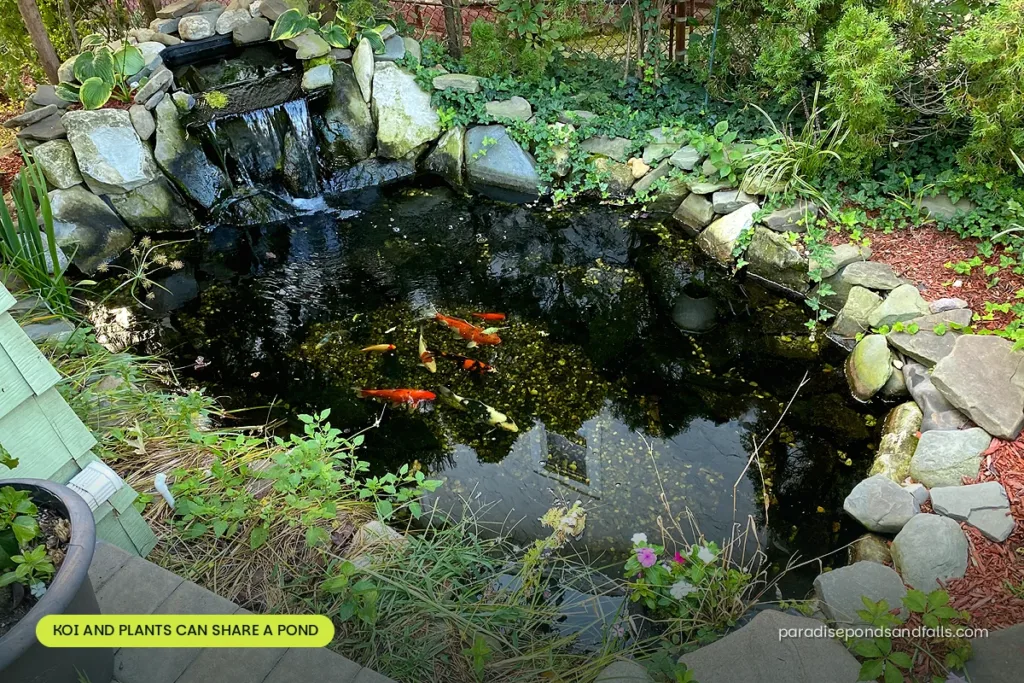 Koi and plants can share a pond when the plants are protected.
Koi love to graze on soft plants and dig in pots. To keep both: set large rocks over the soil in each pot, plant marginals on shelves the koi cannot easily reach, use floating plant islands, and grow extra plants in the stream or a bog area where the fish cannot get to them. Tough plants like rushes and pickerelweed hold up better than soft ones.
How to plant pond plants
Use aquatic pots or fabric planting bags
Pots keep plants from spreading across the pond and make them easy to lift out for trimming.
Fill with heavy soil, not potting mix
Use aquatic planting media or heavy clay garden soil. Bagged potting mix floats away and releases nutrients that feed algae.
Add a fertilizer tab and cap with gravel
Push an aquatic fertilizer tablet into the soil, then cover the top with a layer of pea gravel so fish cannot dig and the soil stays put.
Lower it to the right depth slowly
Start new lilies on a higher shelf or a few bricks, then lower them to their final depth as the leaves reach the surface.
Pond plant care through the Long Island year
Spring: plant and divide once the danger of frost has passed, usually from late April. Start fertilizing lilies when growth begins. Summer: remove yellow leaves and spent flowers, feed lilies monthly and thin plants that cover more than about 60% of the surface. Fall: cut marginals back to a few inches above the water and remove tropical floaters. See how to winterize a koi pond. Winter: move potted lilies to the deepest part of the pond, below the ice line, and leave the hardy plants alone until spring.Paradise Ponds & Falls builds ponds across Nassau and Suffolk County with planting shelves at the right depths and hardy, native plants chosen for your sun, your fish and our winters.
Struggling with algae? Plants are the long-term fix, and our guide to clearing green pond water shows how they fit with a UV clarifier and good filtration. Choosing fish too? See the best fish for an outdoor pond.
Pond plant FAQs
What pond plants are native to Long Island?
Good native choices include pickerelweed, blue flag iris, marsh marigold, cardinal flower, arrowhead, soft rush, hornwort and American waterweed. All are hardy in our climate and support local pollinators and wildlife.
How many plants should a pond have?
Aim to cover about 40 to 60% of the water surface with lily pads, floating plants and edge plants. That shades out algae without hiding your fish.
Do pond plants survive winter on Long Island?
Hardy and native pond plants do. Cut marginals back in fall and move potted lilies below the ice line. Tropical plants such as water hyacinth, water lettuce and tropical lilies die at the first frost.
Is anacharis legal in New York?
It depends on the plant. The name anacharis is often used for Brazilian waterweed (Egeria densa), which is prohibited in New York. The native American waterweed (Elodea canadensis) is not. Check the scientific name before you buy.
Can I use potting soil for pond plants?
No. Potting mix is light, floats out of the pot and releases nutrients that feed algae. Use aquatic planting media or heavy clay soil, and top it with gravel.
When should I plant pond plants on Long Island?
Spring to early summer, once the danger of frost has passed and the water is warming, usually from late April. That gives plants a full season to settle in before winter.