

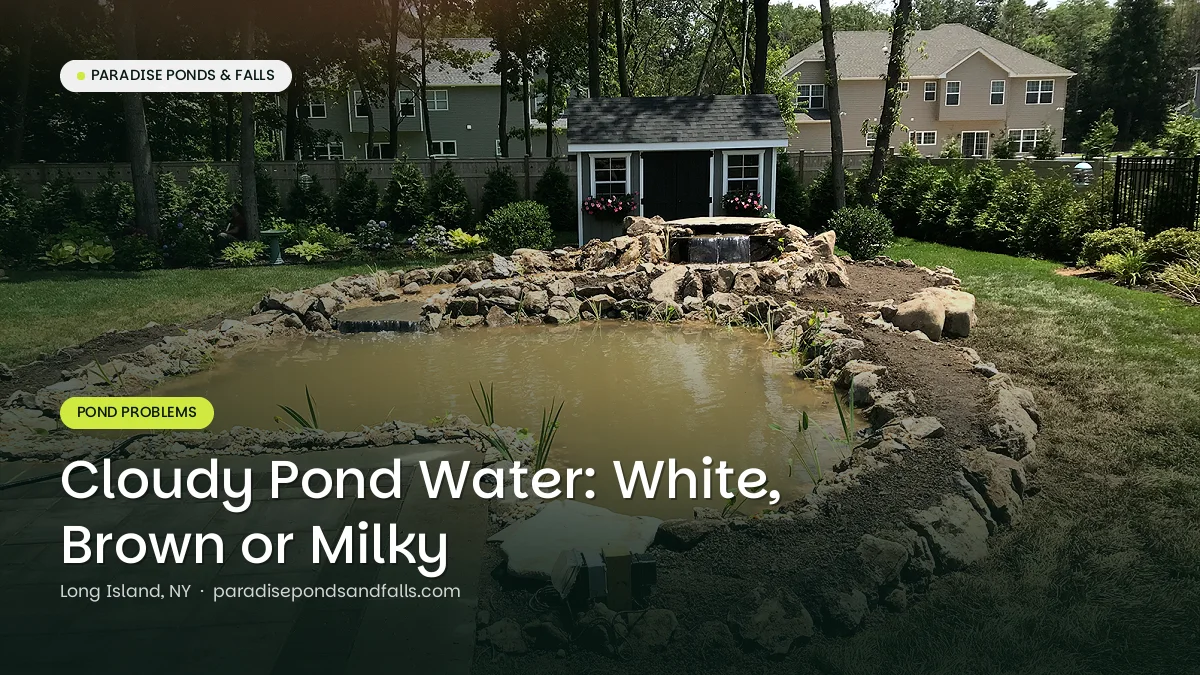
Cloudy pond water is not one problem but several, and the color tells you which one you have. Milky white water, muddy brown water and tea-colored water have completely different causes, and the fix for one can make another worse. Start by matching the color, then follow the steps to clear it.
Milky white or gray water is usually a bacterial bloom from overfeeding, a new pond or decaying waste. Muddy brown water is suspended soil or silt. Clear but tea-colored water comes from tannins in leaves and wood. Green water is algae. To clear cloudy pond water, cut back feeding, clean the skimmer and filter, do a partial water change with dechlorinated water, add beneficial bacteria and give it a week; if fish gasp at the surface, add air first.
What color is your pond water?
Tap the color closest to your pond for the likely cause and the fix.
Cloudy pond water by color: causes and fixes
Here is the full picture in one place.
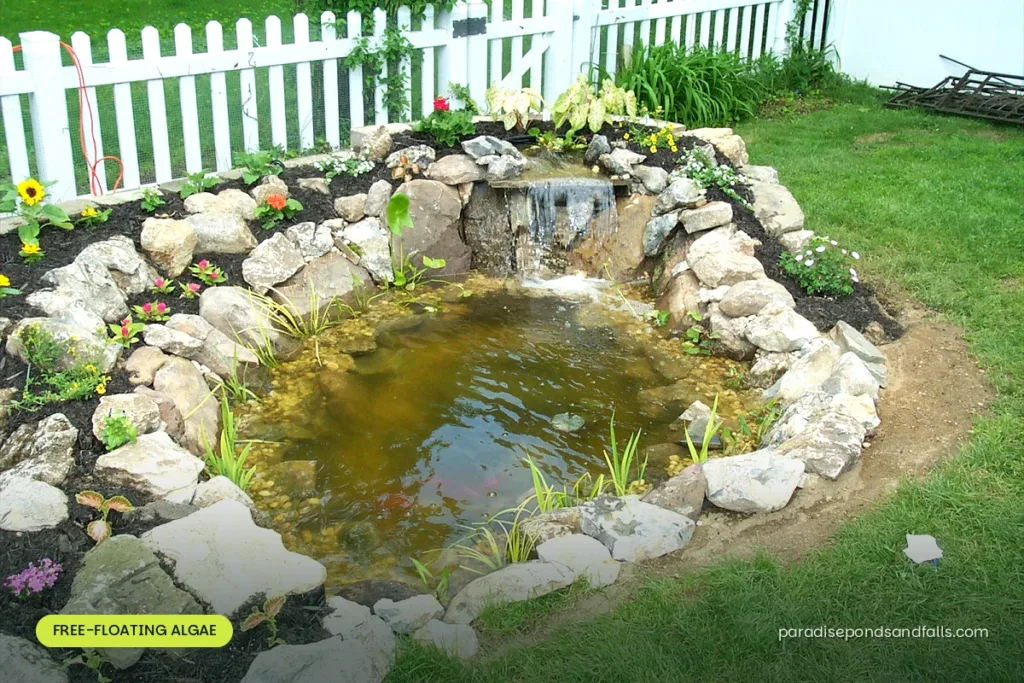 Pea-soup green water is free-floating algae, a different problem from cloudy white or brown water.
How to clear cloudy pond water
These six steps fix most cloudy water, whatever the color.
Test the water
Ammonia or nitrite above zero means the filter is not keeping up. Our koi water test checker explains what the numbers mean.
Cut back on feeding
Feed every other day, and only what the fish finish in a few minutes. Uneaten food is the most common cause of milky water.
Clean the skimmer and filter
Empty the net, rinse the filter mats in pond water and make sure water is flowing well through the filter.
Do a partial water change
Replace 10 to 20 percent of the water with tap water treated with a dechlorinator.
Add beneficial bacteria
Bacteria break down the waste that feeds the cloudiness. See beneficial bacteria for ponds.
Give it a week, then treat the specific cause
Most bacterial blooms clear in days. For silt, a pond clarifier can clump particles so the filter catches them; for tannins, activated carbon in the filter helps; for green water, see how to fix green pond water.
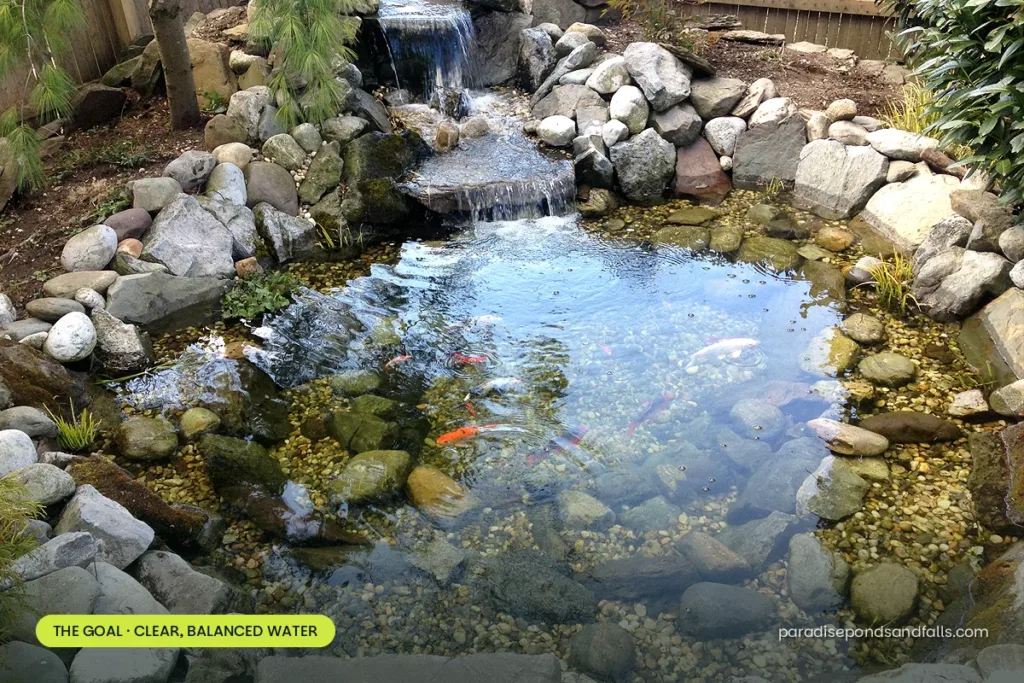 The goal: water clear enough to see the rocks on the bottom of the shelves.
What not to do
- Do not drain and refill the whole pond. It wipes out the good bacteria and the cloudiness usually comes back worse.
- Do not scrub the filter clean under the tap. Chlorine kills the bacteria the filter depends on.
- Do not stack several treatments at once. Use one product at a time, and follow the label.
- Do not keep feeding heavily while the water is cloudy.
Paradise Ponds & Falls diagnoses cloudy water across Nassau and Suffolk County, from filter problems to sludge build-up, and fixes the cause, not just the symptom.
Related: koi pond filtration, our pond clean-out process and the pond vacuum guide.
Cloudy pond water FAQs
Why is my pond water cloudy after cleaning?
A clean-out stirs up fine silt and removes some of the beneficial bacteria, so a light haze for a few days is normal. Add bacteria, run the filter and it should settle within about a week.
Why is my pond water brown?
Clear brown water is tannins from leaves, wood or mulch and is harmless; activated carbon and a partial water change help. Muddy brown water is suspended soil from runoff, digging fish or a new pond, and clears as the silt settles and the filter catches it.
Why is my pond water milky white?
Usually a bacterial bloom, which happens when there is more waste than the filter's bacteria can handle: overfeeding, a new pond, a dead fish or rotting debris. Cut feeding, add air and clean the filter.
Will a UV clarifier fix cloudy water?
A UV clarifier fixes green water caused by free-floating algae. It does little for silt, tannins or a bacterial bloom, which need the steps in this guide.
How long does it take for cloudy pond water to clear?
A bacterial bloom often clears in a few days to a week once the cause is fixed. Silt can take longer, and green water depends on the fix. If it is not improving after a week or two, have the pond checked.