

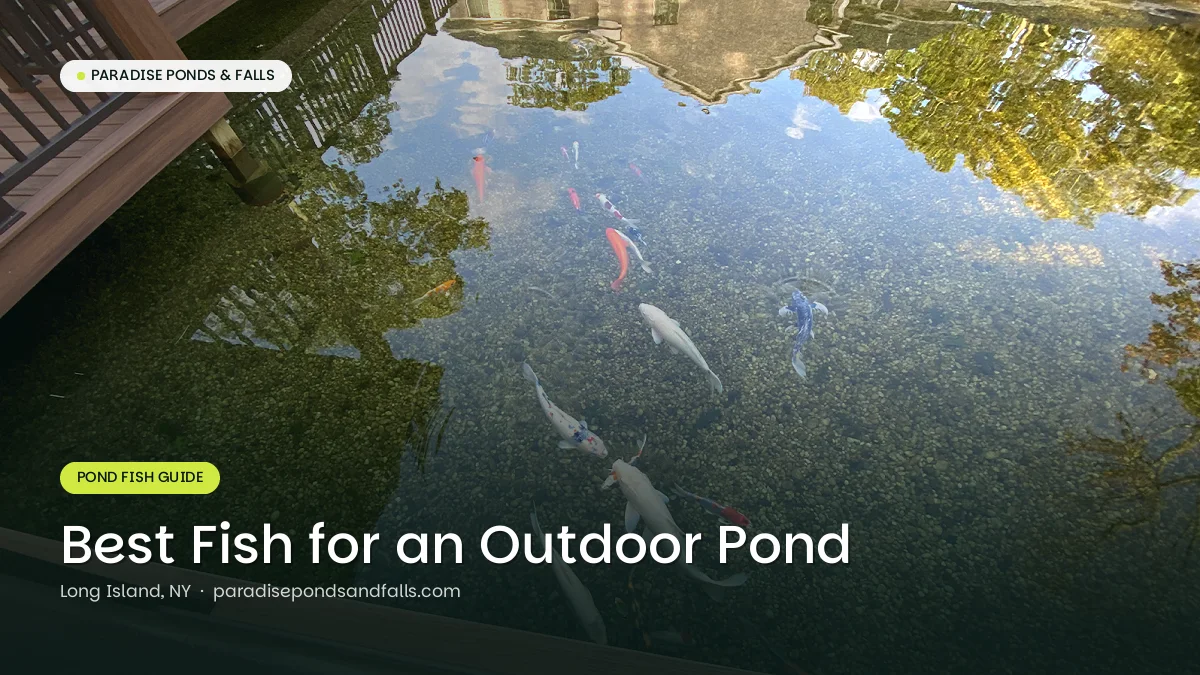
Choosing fish is the fun part of owning a pond, and the part people most often get wrong. A fish that looks great in the pet store can struggle through a Long Island winter or eat every plant you own. This guide covers the best fish for an outdoor pond in our climate, the ones to skip, and how to add new fish so they settle in safely.
The best fish for an outdoor pond on Long Island are koi, comet and common goldfish, shubunkins, golden orfe and rosy red minnows. All of them can stay outdoors year-round if the pond is deep enough and a hole stays open in the ice. Koi need a large pond at least 3 feet deep, while goldfish and minnows suit smaller ponds. Avoid fancy goldfish, tropical fish and grass carp.
What makes a fish right for a Long Island pond
Before you fall for a fish, check it against three questions:
Can it live under ice? Our ponds freeze over in January and February. The fish has to slow down and rest through months of cold water. Will it fit when it is full grown? A 4-inch koi can reach 2 feet or more. Stock for the adult size, not the size in the bag. Will it get along with your plants and other fish? Some fish uproot plants, and big fish will eat small ones.The 5 best fish for an outdoor pond
These are the fish we recommend most often for backyard ponds in Nassau and Suffolk County.
1. Koi
The classic pond fish: colorful, friendly, and often tame enough to eat from your hand. Koi are very cold-hardy but grow large and produce a lot of waste, so they need a big pond, strong filtration and a deep zone for winter. With good care they live for decades.
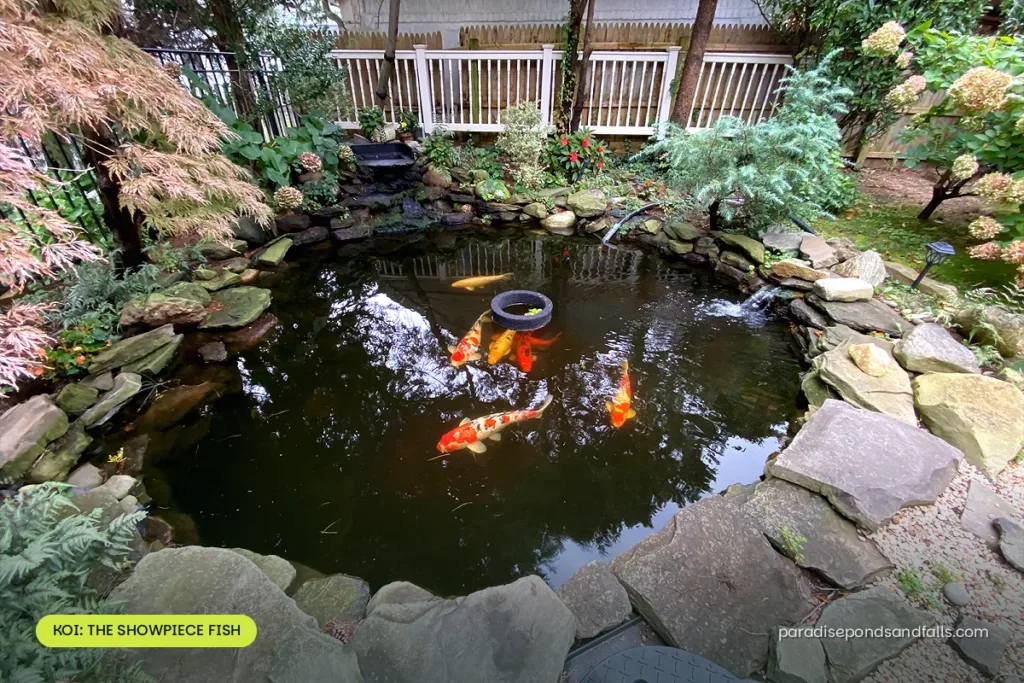 Koi are the showpiece, but they need the most room and the best filtration.
2. Comet and common goldfish
Single-tail goldfish are the toughest pond fish you can buy. They handle cold water well, stay much smaller than koi and suit ponds of almost any size. Comets have long flowing tails and are quick swimmers, which helps them dodge predators. They breed readily, so start with a few.
3. Shubunkins
Shubunkins are calico single-tail goldfish with patches of blue, red, white and black. They are just as hardy as comets and add color to ponds that are too small for koi.
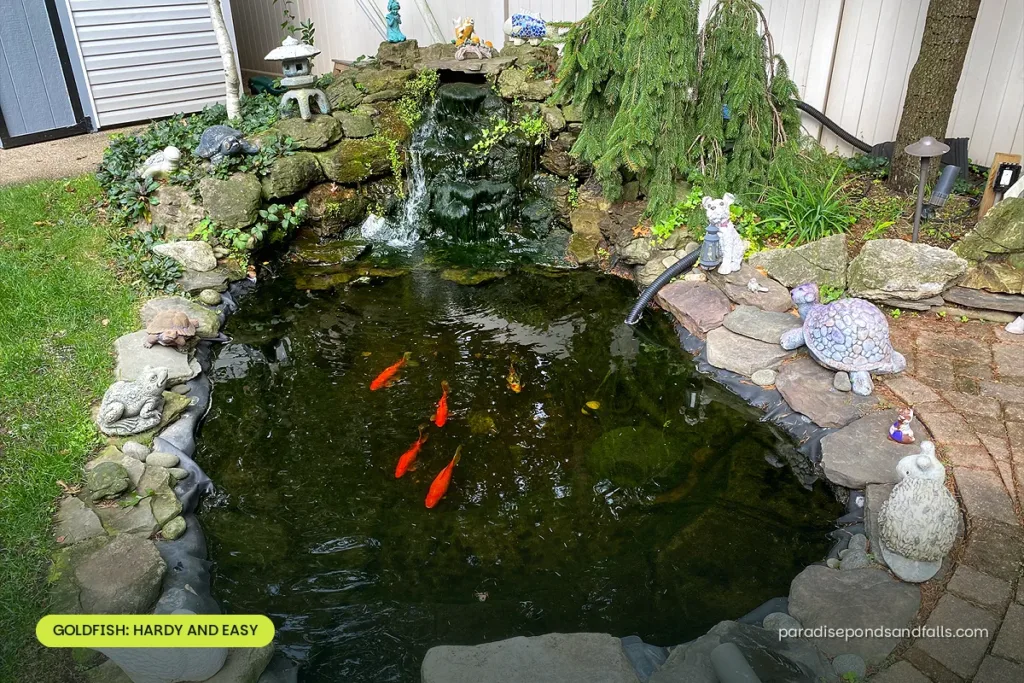 Single-tail goldfish are bright, hardy and suit almost any pond.
4. Golden orfe
Orfe are slim, fast fish that swim in groups near the surface, where they snap up insects and mosquito larvae. They need a large pond with plenty of oxygen and moving water, and they can jump, so keep the water level a little below the edge.
5. Rosy red minnows
A color form of the native fathead minnow, rosy reds are tiny, tough and great at eating mosquito larvae. They are perfect for water gardens and small ponds. In a pond with big koi, keep in mind that minnows can become a snack.
Pond fish compared
Use this side-by-side view to match fish to your pond size and goals.
Fish to avoid in a Long Island pond
These fish either do not survive our winters, do not belong in a backyard pond, or need a permit:
✕ Fancy goldfish such as fantails, orandas and bubble eyes. They are slow, struggle in cold water and are easy prey. Keep them indoors. ✕ Tropical aquarium fish. They die once the water cools in fall. ✕ Plecos and pet-store catfish. Most are tropical, and some grow large and stir up the bottom. ✕ Grass carp. They eat pond plants, and in New York stocking them requires a DEC permit. ✕ Fish caught in local lakes or streams. They can bring in parasites and disease, and predators like bass will eat your other fish.How many fish can your pond hold?
For koi, plan on at least 1,000 gallons, plus about 250 gallons for each adult fish. Goldfish and minnows need far less room, but they breed, so their numbers grow on their own. Your filtration matters as much as the gallons: a well-filtered pond handles more fish than a poorly filtered one. Not sure how big your pond is? Try our koi pond size calculator.
💡 Overstocking is the most common cause of green pond water we see. More fish means more waste, and more waste feeds algae.When and how to add new fish
On Long Island, the best time to add fish is late spring to early summer, once the water stays above about 60°F. If you are reading this in fall or winter, wait until spring.
Quarantine new koi
Keep new koi in a separate, aerated tank for a few weeks before they join the pond. It is the best way to keep parasites and disease out of your existing fish.
Float the bag
Float the closed bag in the pond for 15 to 20 minutes, out of direct sun, so the water inside slowly matches the pond temperature.
Mix in pond water
Open the bag and add a little pond water every few minutes. Then net the fish into the pond and throw the store water away instead of pouring it in.
Feed lightly and watch
New fish often hide for a day or two. Feed lightly for the first week and watch for clamped fins, rubbing or gasping at the surface.
⚠️ Never release pond fish into a lake, stream or storm drain. Goldfish and koi released into the wild grow large, crowd out native fish and muddy the water. In New York, both are listed as regulated invasive species under the state's Part 575 rules, so releasing them is against the law. If you need to rehome fish, ask a local pond club or pond store.Keeping pond fish through a Long Island winter
All five fish above can stay outdoors all winter. Goldfish and minnows do fine in ponds 18 to 24 inches deep, while koi need a deep zone of at least 3 feet. Every pond needs a hole kept open in the ice, and feeding stops once the water drops below 50°F. Our guide on how to winterize a koi pond walks through every step.
Paradise Ponds & Falls designs and builds fish ponds and koi ponds across Nassau and Suffolk County, sized for the fish you want, with the depth, filtration and hiding places they need to thrive.
Keep your fish safe once they are in: see how to protect koi from herons, and learn how an ecosystem pond keeps the water healthy for fish and plants.
Pond fish FAQs
Can koi and goldfish live together?
Yes. Koi and single-tail goldfish share the same water needs and get along well. Just count both when you plan your fish load, because goldfish breed and add to the waste.
What is the best fish for a small pond?
Comet goldfish, shubunkins and rosy red minnows. They stay small, handle cold water and do well in ponds that are too small or shallow for koi.
Can pond fish stay outside all winter on Long Island?
Hardy fish like koi, goldfish, orfe and rosy reds can, as long as the pond is deep enough for them and a hole stays open in the ice for gas exchange. Fancy goldfish and tropical fish should come indoors.
Which pond fish eat mosquito larvae?
Almost all of them. Rosy red minnows, golden orfe and goldfish are especially good at it, and moving water from a waterfall keeps mosquitoes from laying eggs in the first place.
How long do koi live?
With clean water, good filtration and a safe pond, koi often live for 20 years or more, which is why it pays to build the pond right from the start.
Should I feed my pond fish in winter?
No. Switch to a wheat germ food when the water drops to about 60°F and stop feeding below 50°F. Fish live on stored energy all winter and start eating again in spring.