

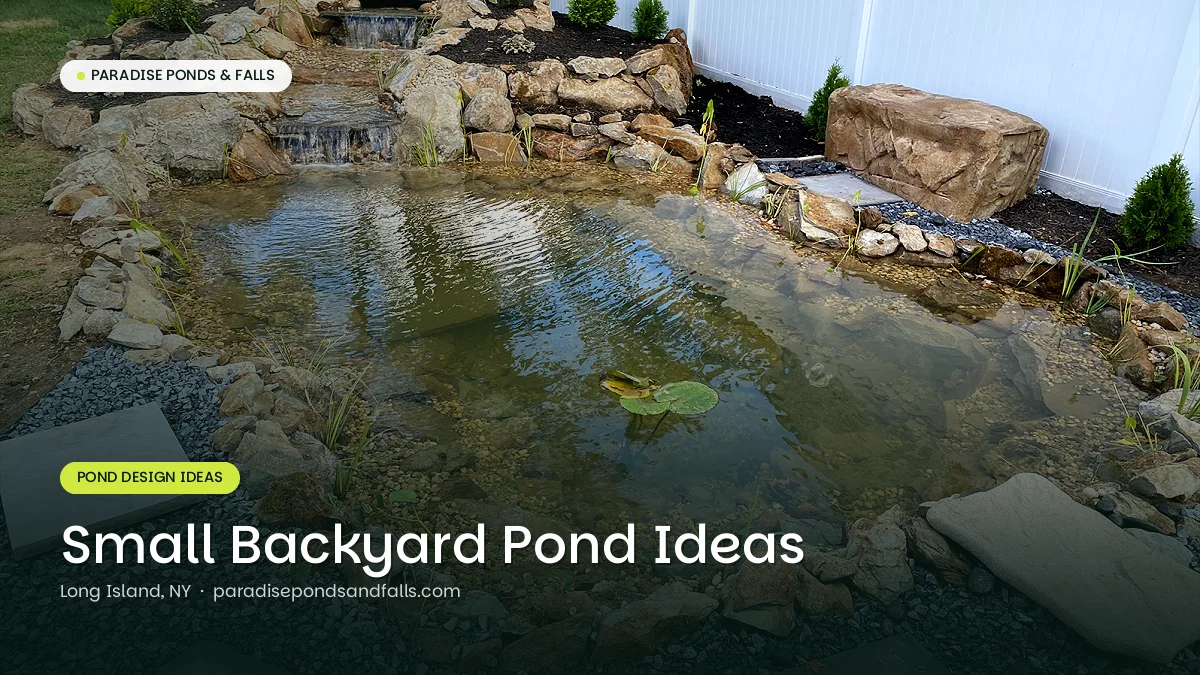
You do not need a big lot to enjoy the sound of water. Many of the ponds we build on Long Island sit in small yards: beside a patio, in a corner against the fence, or along a narrow side yard. These small backyard pond ideas come from real projects, with notes on how much space each one needs, how much upkeep to expect and whether fish can live in it.
The best small backyard pond ideas use space you already have: a pond tucked into a corner, a waterfall built against the fence, a feature right beside the patio, or a pondless waterfall with no open water. A small pond of about 6 by 8 feet holds roughly 400 gallons, enough for goldfish. For koi, plan on at least about 1,000 gallons with a 3-foot-deep zone.
8 small backyard pond ideas from real yards
Each idea lists the space it needs, the upkeep and the fish it suits, so you can match it to your yard.
1. Tuck a pond into a corner
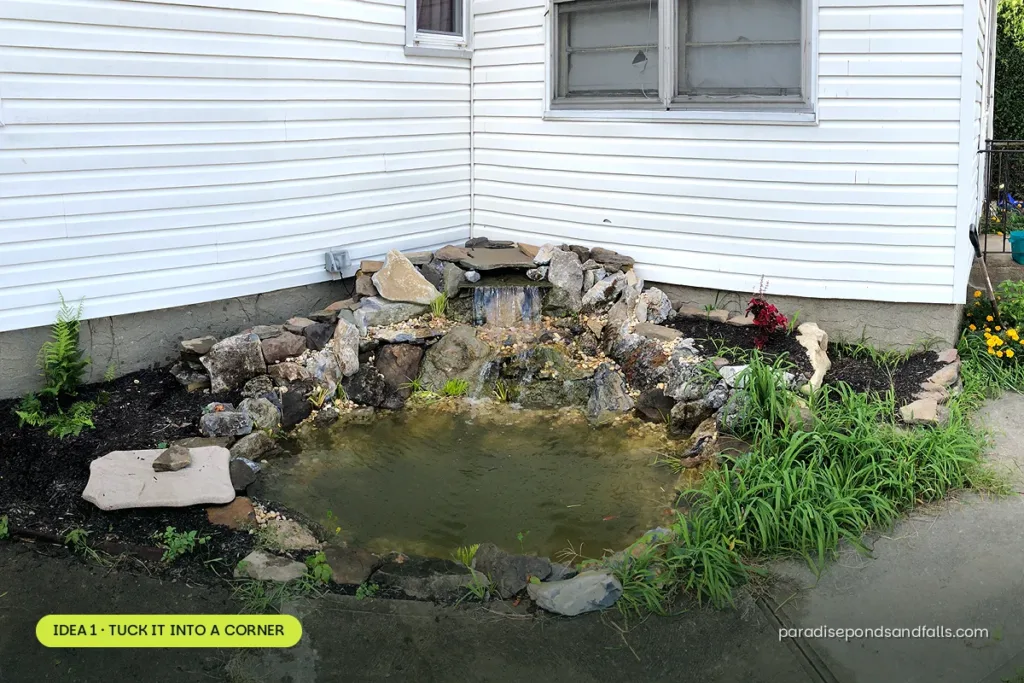
Corners are the most wasted space in small yards. A pond set against the house or a fence uses that space, frames the water with a solid backdrop and leaves the rest of the lawn open.
2. Put the waterfall in the corner
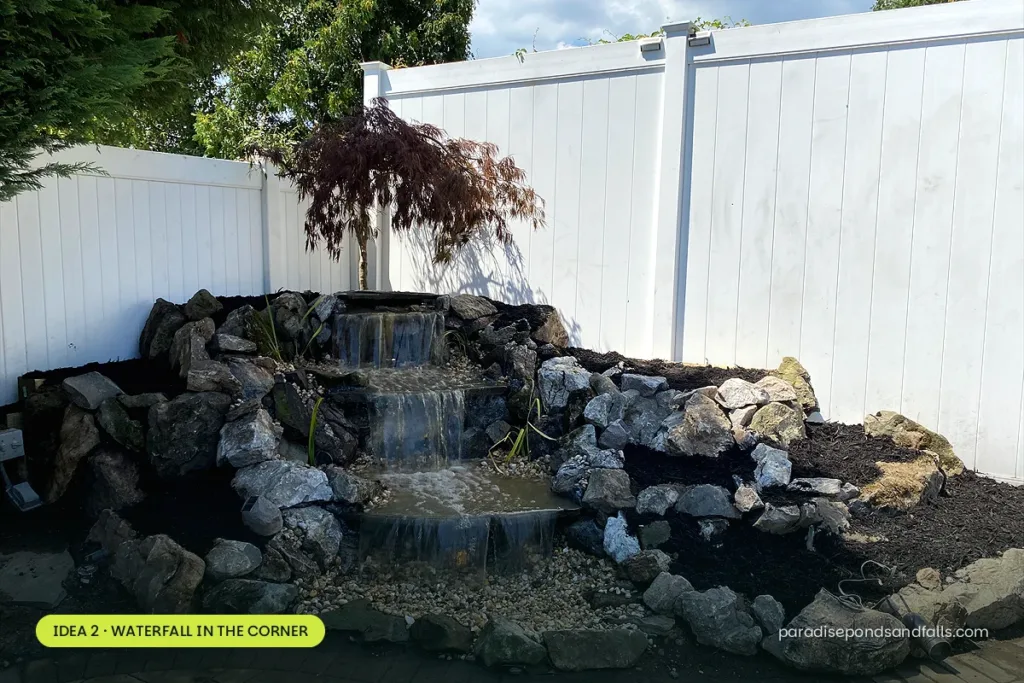
Building the waterfall into the corner gives you height and sound without taking more ground. The rocks climb the corner instead of spreading across the yard, and the falling water hides street noise.
3. Build it right next to the patio
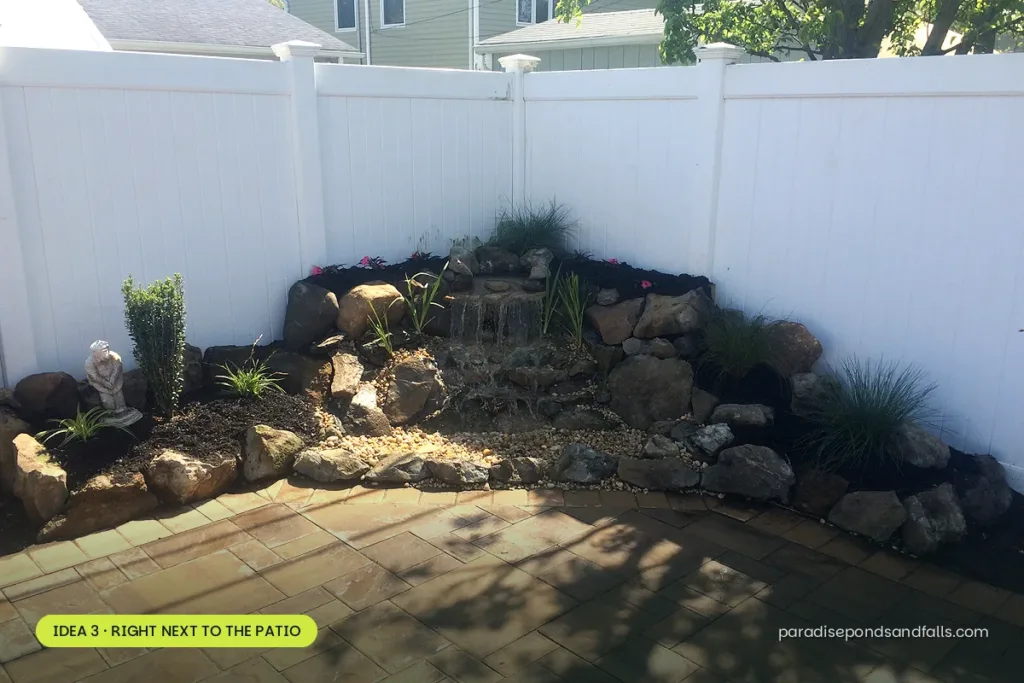
In a small yard, you will enjoy the water most where you already sit. Placing the pond or waterfall at the edge of the patio puts it within arm's reach of your chairs and makes the patio feel bigger. This one is shown just after the build, before the plants filled in.
4. Go pondless
A pondless waterfall recirculates water from a hidden basin under the gravel, so there is no open pond at all. You get the look and sound in a footprint as small as a flower bed, with very little maintenance and no standing water, which makes it the safest choice with young kids and pets.
5. Run a stream along the fence
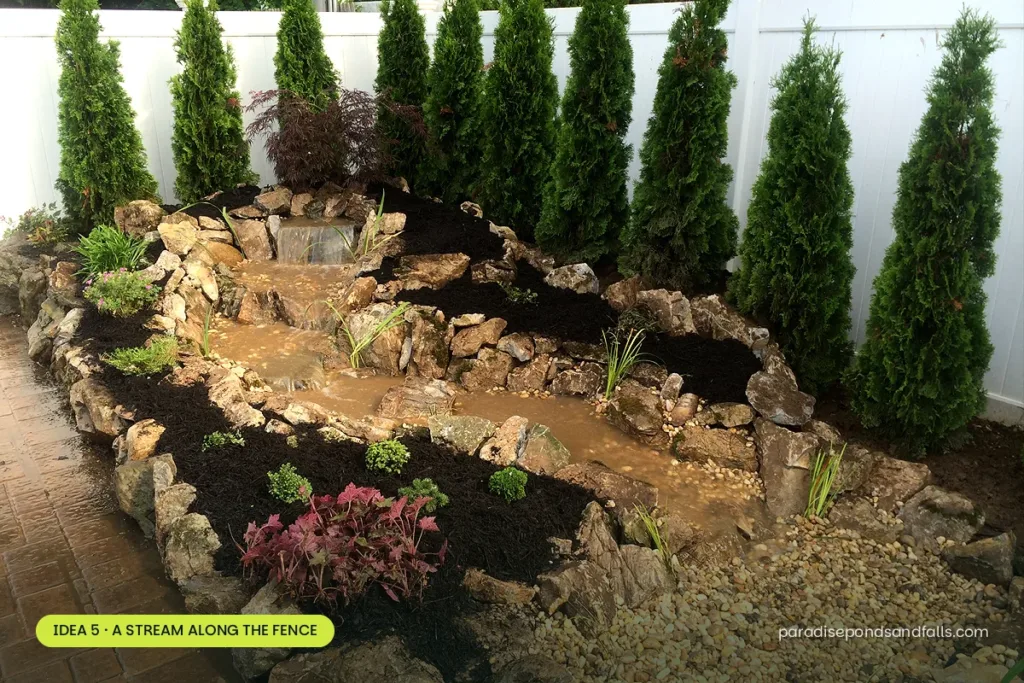
Long, narrow side yards suit a stream better than a round pond. Water can run along the fence line and drop into a small basin or a pondless reservoir, turning an awkward strip into a feature. This stream bed is shown freshly built, with new evergreens behind it.
6. A small pond that goes deep, not wide
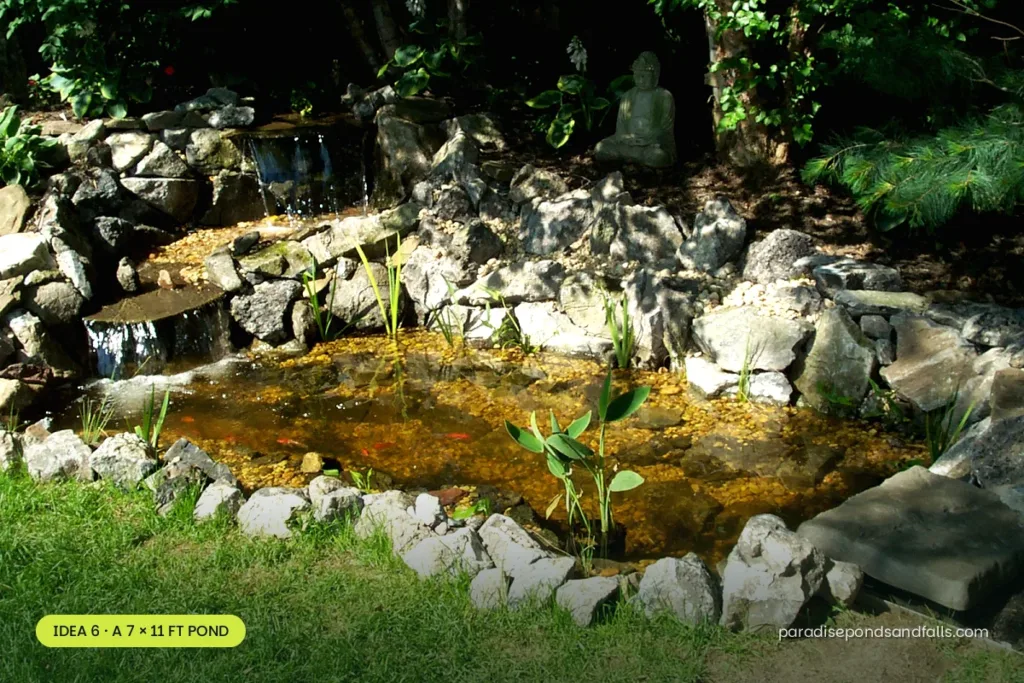
This 7 by 11 foot pond shows how much a compact footprint can hold. When space is tight, go deeper rather than wider: depth adds gallons, keeps the water cooler in summer and gives fish a safe zone in winter. Koi need at least 3 feet in one area on Long Island; see how deep a koi pond should be.
7. Raise it up
A raised or half-raised pond needs less digging, works on patios and slopes, and puts the water closer to eye level. A wide stone edge doubles as a seat, which is handy in a yard with little room for extra furniture.
8. Start with a bubbling feature
For the smallest spaces, a bubbling rock, an urn fountain or a basin feature brings moving water to a patio corner or an entryway. They take up a few square feet and are easy to add to later. See our water features for ideas.
How big should a small pond be?
Here is roughly how many gallons common small pond sizes hold, and what they suit. These are estimates for an oval pond with planting shelves; your exact shape changes the numbers.
Want an estimate for your own pond? Our pond size calculator works it out from length, width and depth.
How to make a small pond look bigger
A few design tricks make a compact pond feel larger than it is:
Plants spilling over the back edge make it hard to tell where the water ends.
Dark liner and stone make the water look deeper and reflect the sky.
A small waterfall or taller plants behind the pond draw the eye up, not across.
Curved, irregular edges with varied rock sizes read larger than a neat ring of stones.
Small pond mistakes to avoid
✕ Making it too shallow everywhere: small, shallow ponds heat up fast and turn green ✕ Putting it under a big tree, where leaves fill it every fall ✕ Choosing a pump too big for the size, so the waterfall splashes water out ✕ Adding koi to a pond built for goldfish ✕ Placing it where you cannot see it from the house or patioWhat affects the cost of a small pond?
Small ponds cost less than large ones, but size is only part of the price. These are the things that move the number most:
- Pond or pondless: a pondless waterfall skips the open pond and much of the excavation.
- Waterfall and rock work: height, stone size and how many spillways.
- Fish: koi need more depth, filtration and gallons than goldfish.
- Access: tight side yards and steps mean more hand work.
- Extras: lighting, plants and a patio edge.
Paradise Ponds & Falls designs ponds, pondless waterfalls and water features for small yards across Nassau and Suffolk County. We visit, measure and show you what fits before anything is dug.
Want more inspiration? See our backyard waterfall ideas, pick the best pond plants for Long Island, or browse the project gallery.
Small pond FAQs
What is the smallest size for a backyard pond?
A pond as small as about 4 by 6 feet can work for plants and a few goldfish if it is deep enough not to freeze solid. If you only want the sound of water, a pondless waterfall or bubbling rock can fit in even less space.
Can you have koi in a small pond?
Only if the pond is big enough for them. Koi grow to 2 feet or more, so plan on at least about 1,000 gallons with a deep zone of 3 feet on Long Island. Smaller ponds suit goldfish and rosy red minnows better.
How deep should a small pond be?
For plants and goldfish, about 18 to 24 inches in the deepest part is enough on Long Island, as long as you keep a hole open in the ice. For koi, at least 3 feet in one area.
Do small ponds need a pump and filter?
Yes, if you want clear water and fish. A small pump with a skimmer and a biological filter keeps the water moving and clean. A pond with no circulation tends to turn green and can breed mosquitoes.
Is a small pond safe with kids?
Any open water needs supervision around young children. If safety is the main concern, a pondless waterfall gives you the look and sound of water with no open pond.
How much maintenance does a small pond need?
Less than most people expect: empty the skimmer, top up the water and add beneficial bacteria through the season, plus a clean-out each spring. Small ponds can swing faster in temperature and water quality, so plants and good circulation matter even more.