

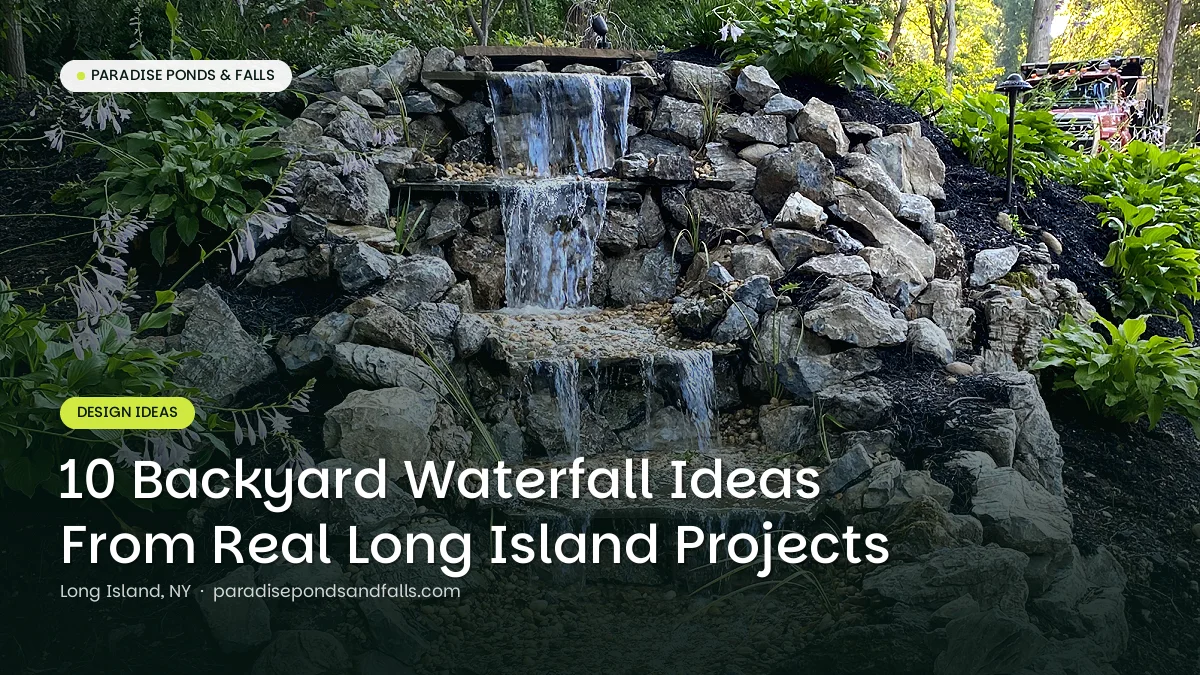
The best backyard waterfall is the one that fits your yard, your budget and how much time you want to spend on upkeep. Below are 10 backyard waterfall ideas, every one of them a real project our crew has built on Long Island, with who each design suits best.
Quick pick: the right waterfall for your yard
Start with your yard. Find your situation below and jump to the idea that fits it best.
10 backyard waterfall ideas from real projects
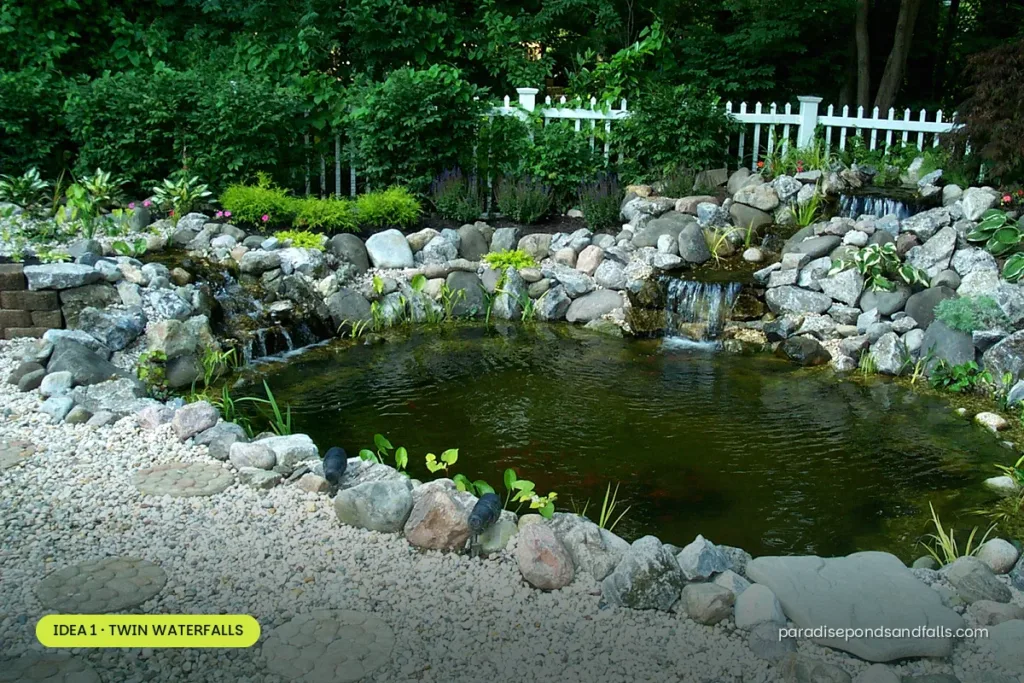
1. Twin waterfalls feeding a koi pond
Two waterfalls spilling into one pond double the sound and movement and give the pond a natural, balanced look from the patio. The extra moving water also adds oxygen for koi.
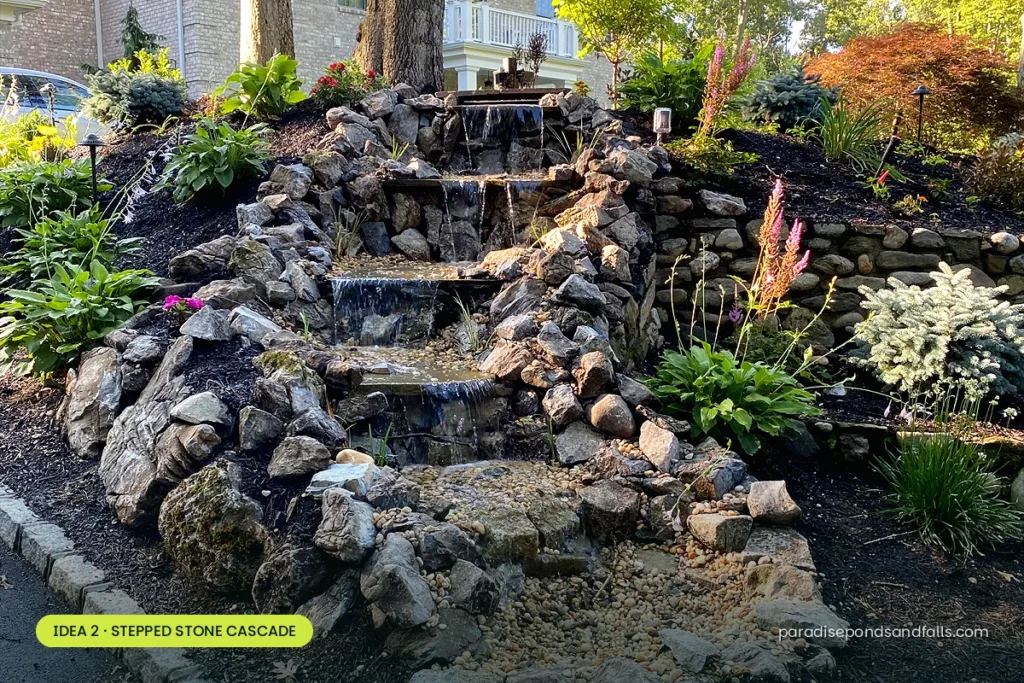
2. Stepped stone cascade
Instead of one tall drop, water tumbles down a series of stone steps. Each step makes its own sound, so the whole feature feels like a mountain stream. It suits yards with a natural slope.
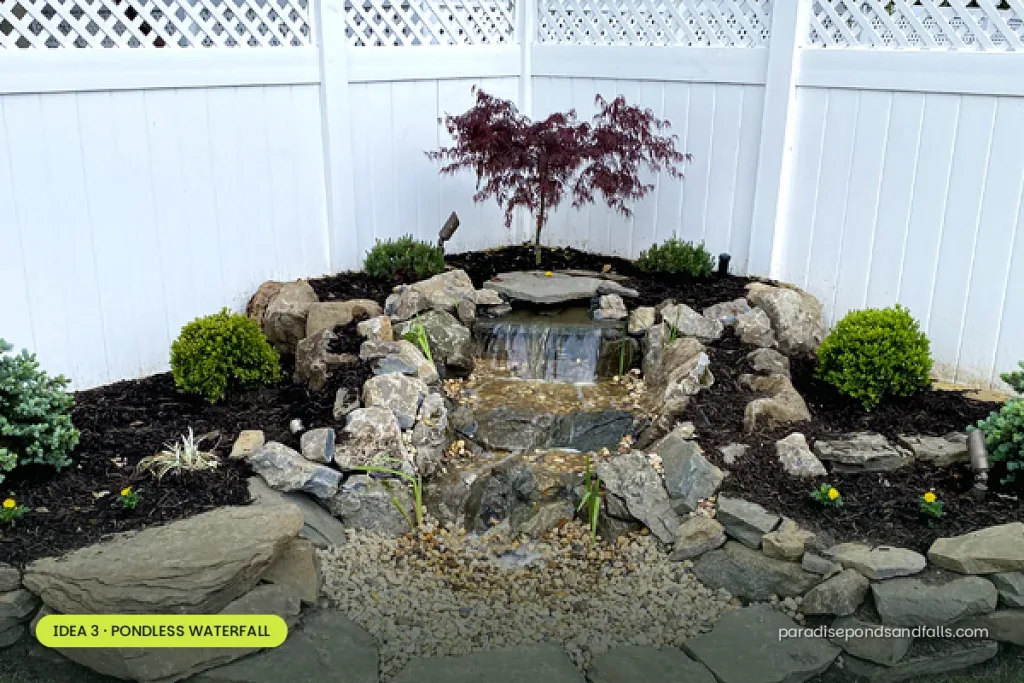
3. Pondless waterfall
The water runs over the rocks and disappears into a hidden basin under gravel, so there is no open pond. You get the look and sound of a waterfall with less maintenance and no standing water, which makes it a favorite for families. See our pondless waterfall installation service.
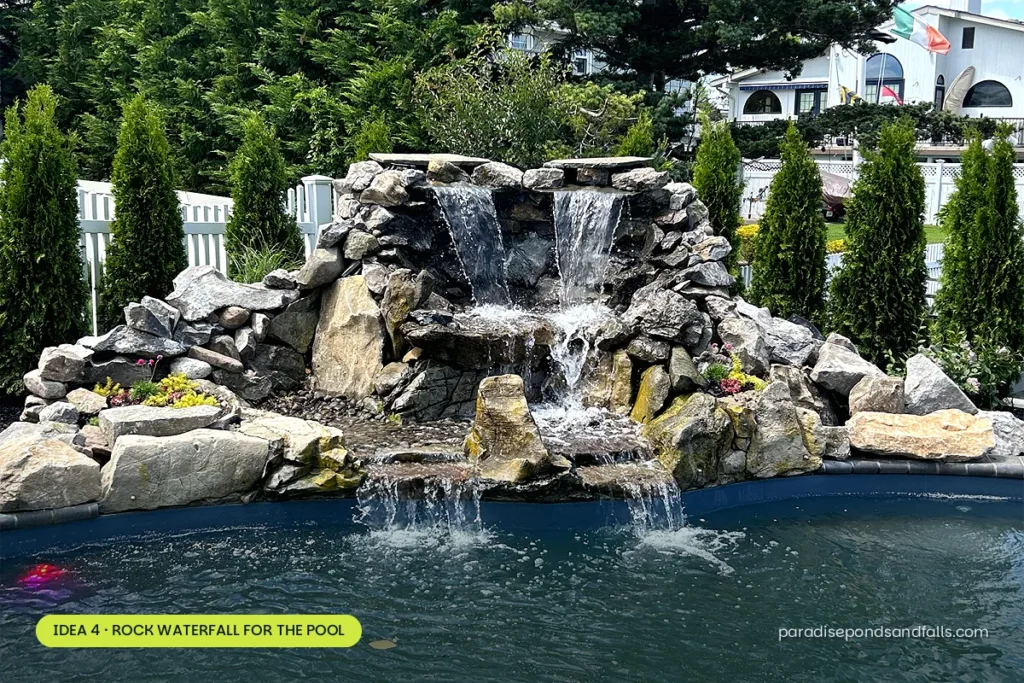
4. Rock waterfall for the swimming pool
A natural boulder waterfall turns a standard pool into a backyard resort. Several spillways along the rock wall spread the flow and the sound, and the rocks hide the plumbing. Learn more about pool waterfall installation.
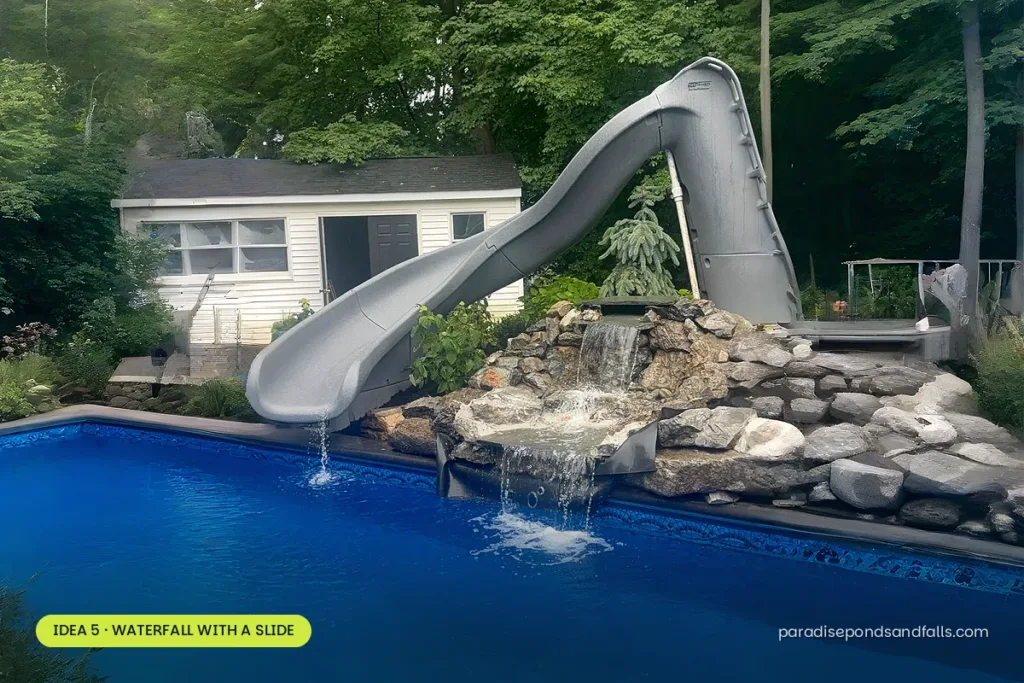
5. Pool waterfall with a slide
Building a slide into the rock work keeps everything looking like one natural feature instead of a plastic slide next to a pool. Kids get the fun and adults get the view.
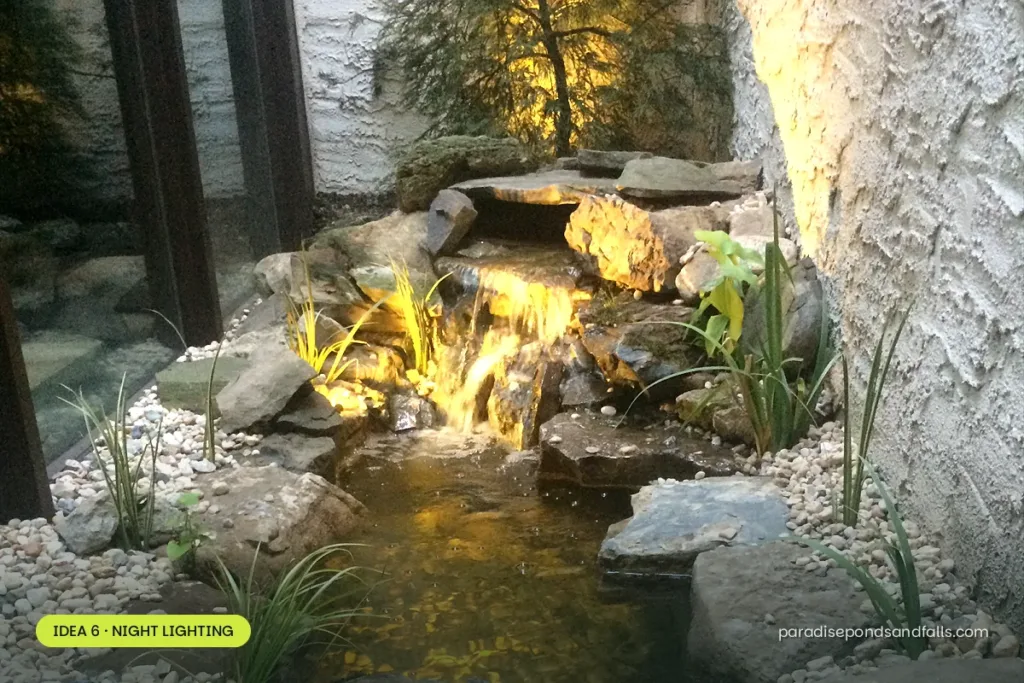
6. Waterfall lighting for evenings
A few warm lights aimed at the falling water make the waterfall the centerpiece of the yard after dark. Lighting is one of the easiest upgrades to add to an existing waterfall.
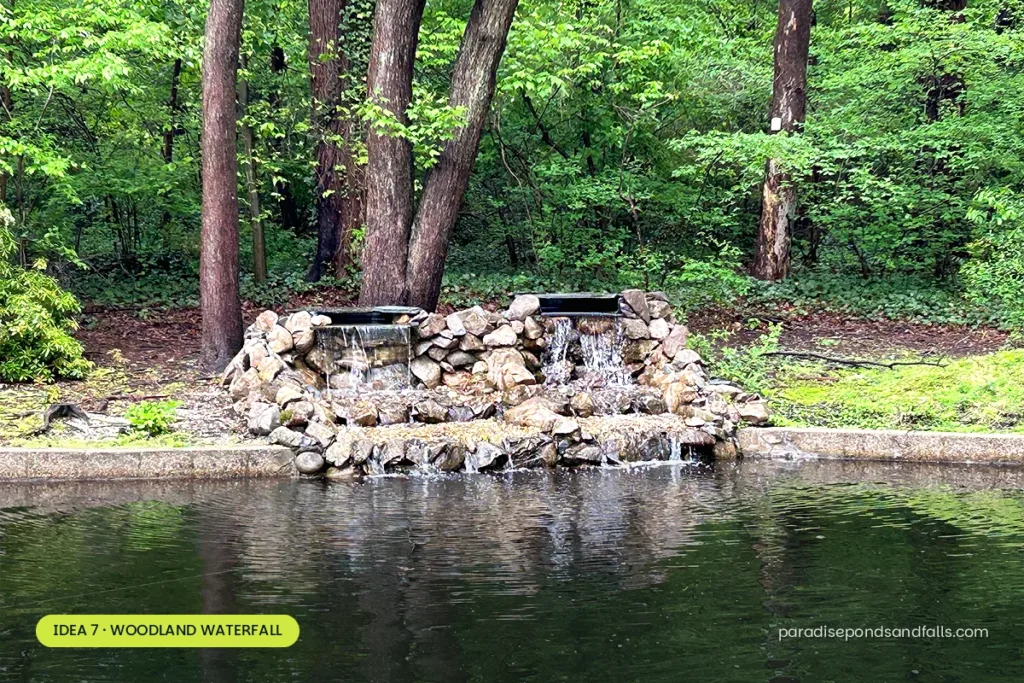
7. Natural woodland waterfall
On wooded lots, a low, wide waterfall built from local-looking stone blends into the trees as if it had always been there. Plan for leaf netting in the fall, since trees mean more cleanup.
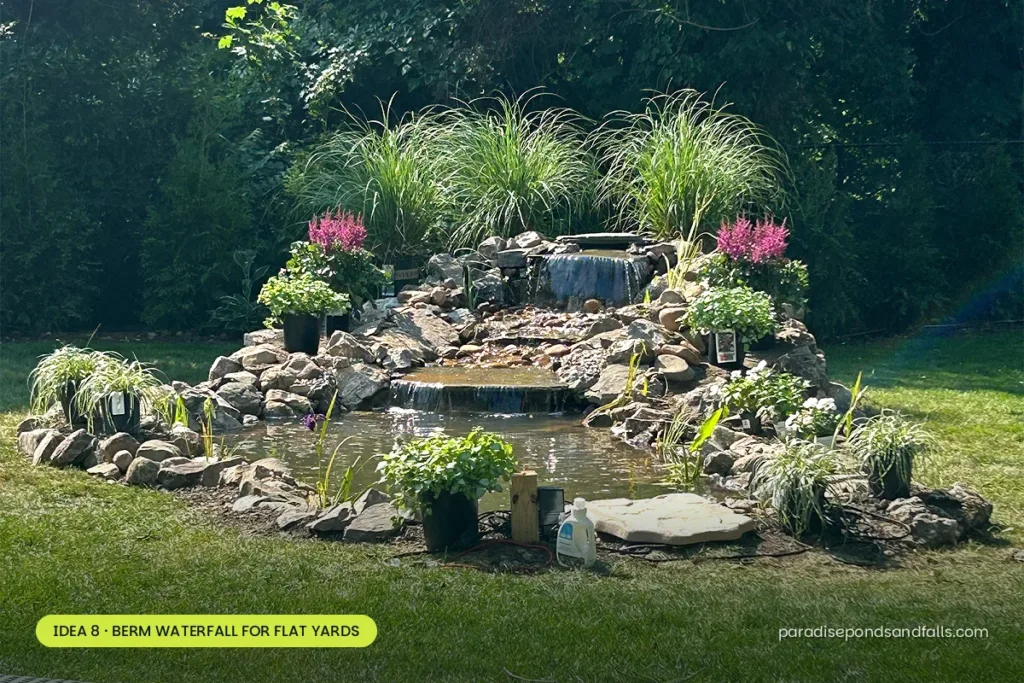
8. Berm waterfall for a flat yard
No slope? We build one. A planted soil berm gives the waterfall height so it looks natural even in a flat lawn, and the plantings on top hide the hardware.
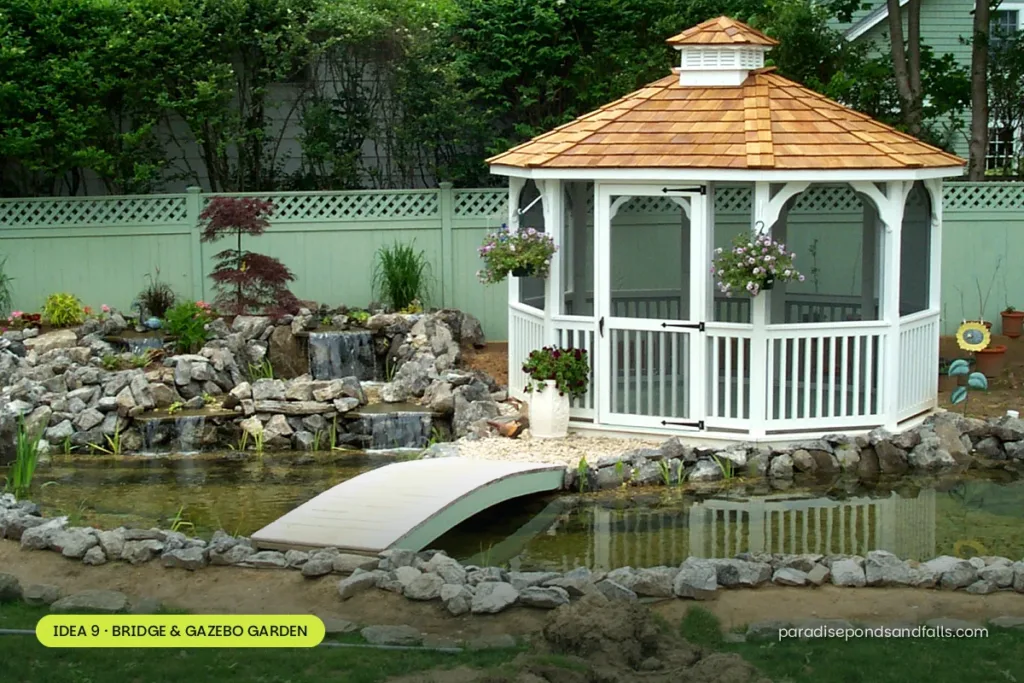
9. Water garden with a bridge and gazebo
For bigger properties, a waterfall and pond can anchor a whole garden room: a footbridge across the water and a gazebo for sitting and listening. It turns the pond into a destination, not just a view.
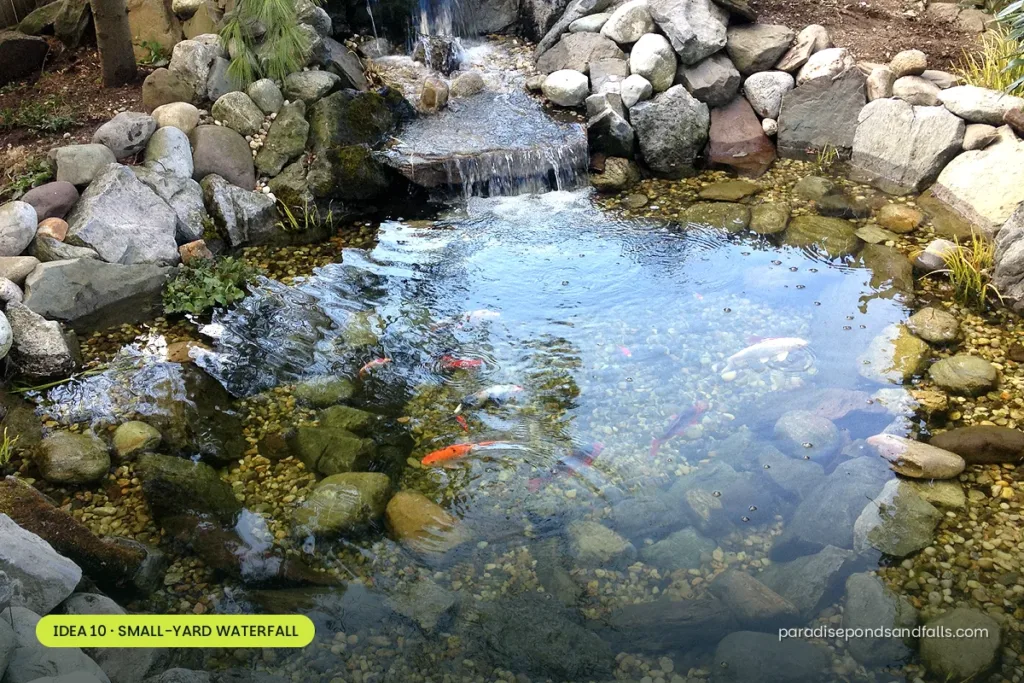
10. Small-yard waterfall
A small pond with a short waterfall fits in a corner of the yard and still brings the sound of water to the patio. Keeping the drop low makes it a gentle trickle rather than a roar.
Budget symbols compare these ideas with each other: $ is the most affordable and $$$ the biggest project. Every yard is different, so the real cost depends on size, access, rock and equipment. We give a free, exact estimate after seeing your yard.
Backyard waterfall ideas on a budget
A pondless waterfall skips the pond excavation and liner area, and it costs less to maintain.
Building into an existing slope saves on soil and rock compared to building a berm.
A wider, lower waterfall often looks more natural and needs a smaller pump.
Start with the waterfall now and add lighting, a stream or a pond later.
An oversized pump costs more to buy and run every month.
Plants are cheaper than extra rock and do more to make a waterfall look natural.
Pondless, pond or pool waterfall: how they compare
Most of the ideas above fall into one of three types. Here is how they compare.
How to make a backyard waterfall look natural
The difference between a waterfall that looks built and one that looks like it was always there comes down to a few details our crew watches on every job:
- One main spillway. Nature rarely splits water evenly, so one strong fall with smaller side trickles looks more real.
- Mix rock sizes. A few large boulders with smaller stones between them, never a neat wall of same-size rocks.
- Bury the rocks. Setting each stone partly into the ground makes it look settled, not placed.
- Plant the edges. Grasses and ground covers softening the rock edges make the biggest visual difference.
- Tune the sound. The height of the drop and the shape of the spill stone decide whether you hear a babble or a roar.
Not sure which idea fits your yard? Most clients mix two or three, like a pondless waterfall with lighting, or a koi pond with a stepped cascade. We sketch the options with you on site.
Paradise Ponds & Falls designs and builds pondless waterfalls, pond waterfalls and pool waterfalls across Nassau and Suffolk County. Every one in this guide is our own work.
Want to see more? Browse our project gallery.
Backyard waterfall FAQs
Can you have a waterfall without a pond?
Yes. A pondless waterfall recirculates water from a hidden underground basin covered with gravel, so you get the look and sound of a waterfall with no open water to maintain.
Do backyard waterfalls attract mosquitoes?
No. Mosquitoes lay eggs in still water, and a running waterfall keeps the water moving. Fish in a pond also eat larvae. The CDC recommends removing standing water around the home, and a moving waterfall does not count as standing water.
How loud is a backyard waterfall?
As loud or as quiet as you want. The height of the drop, the amount of water and the shape of the spill stone all change the sound, from a soft trickle to a strong rush.
Can a backyard waterfall run in winter?
It can, but ice can build up and push water out of the stream. Many Long Island homeowners shut theirs down for winter. See our guide on winterizing a pond for both options.
How much maintenance does a waterfall need?
Pondless and pool waterfalls need very little: topping up water and a spring clean-out. Waterfalls into fish ponds need regular filter care and a seasonal clean-out.
How long does it take to build a backyard waterfall?
Most of our waterfall projects are finished within a few days to a couple of weeks, depending on size, access and whether a pond is included.