

Green pond water is the most common pond problem we see on Long Island, and the good news is that it is almost always fixable. Green water is caused by tiny free-floating algae feeding on extra nutrients and sunlight. Fix the reason they are thriving and the water clears, usually within one to three weeks.
To clear green pond water, run a correctly sized UV clarifier, clean the skimmer and filter, change 10–20% of the water with a dechlorinator, and add beneficial bacteria. Then stop it coming back: cover 40–60% of the surface with plants, feed fish only what they eat in a few minutes, and keep enough circulation and filtration for your pond size. Avoid draining the pond or dumping in strong algaecide, which can harm fish.
Green water or string algae? Know which one you have
Ponds get two very different kinds of algae, and they need different fixes. Scoop some water into a clear glass or a white cup and look at it against the light.
Green water
Free-floating algaeThe water itself looks like pea soup and you cannot see the fish or the bottom.
- Water in the cup is tinted green
- Often shows up fast in spring or after a hot spell
- Best fix: UV clarifier, filtration and plants
String algae
Filamentous algaeThe water is clear, but long green hair-like strands grow on rocks, the waterfall and the liner.
- Water in the cup is clear
- Strands wrap around a stick when you twirl it
- Best fix: remove by hand, bacteria and plants (see below)
A thin layer of short green or brown algae on the rocks is normal and healthy in a natural pond. It is part of the ecosystem that keeps the water clean, so there is no need to scrub it off.
Why pond water turns green: 6 common causes
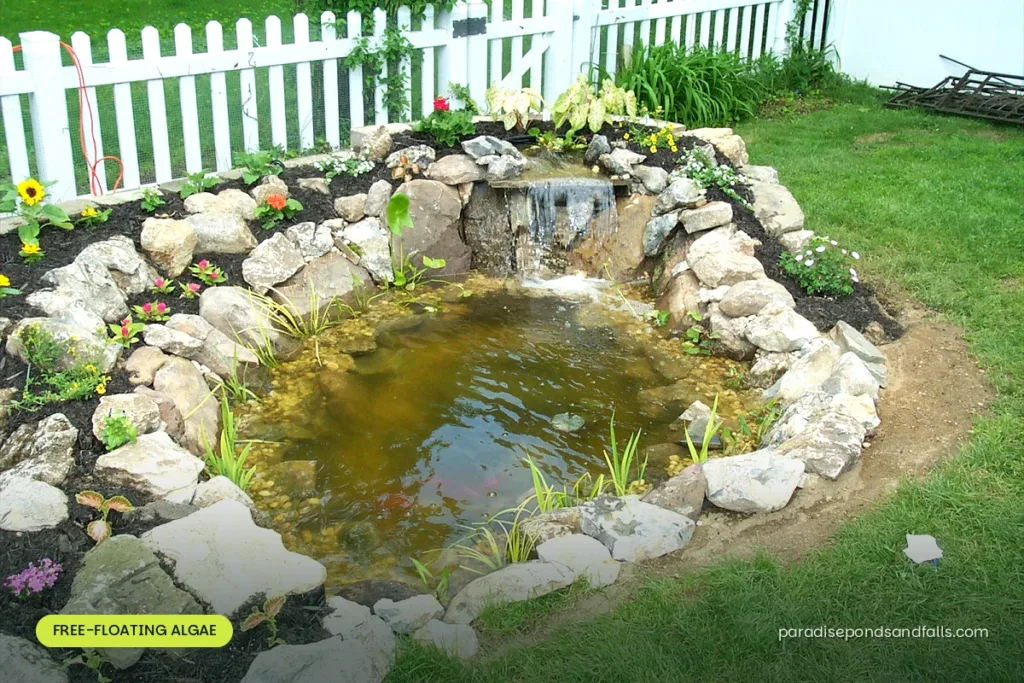 Free-floating algae turn the whole pond green when nutrients and sunlight are high.
Too much fish food
Uneaten food and fish waste break down into the nutrients algae love.
Fix: feed less, and only what they finish in a few minutes.Too many fish
More fish means more waste than the filter and plants can handle.
Fix: match fish load to pond size and filtration.Not enough plants
Plants compete with algae for nutrients and shade the water.
Fix: cover 40–60% of the surface with plants.Weak filtration or circulation
A small pump or a clogged filter lets water sit and nutrients build up.
Fix: clean the skimmer and filter, check the pump.No UV clarifier, or an old bulb
UV bulbs lose strength over time even if they still light up.
Fix: replace the UV bulb every season.Spring warm-up
Water warms and sunlight increases before plants and bacteria are fully active.
Fix: a spring clean-out and bacteria, then patience.How to clear green pond water: a step-by-step plan
Work through these in order. Most Long Island ponds clear within one to three weeks once the cause is dealt with.
Check ammonia, nitrite, nitrate, phosphate and pH with a pond test kit. High nitrate or phosphate tells you nutrients are the driver.
Empty the skimmer basket and rinse filter pads in a bucket of pond water, not tap water, so you keep the good bacteria.
Swap 10–20% of the water and add dechlorinator as you refill. Avoid huge water changes, since tap water can add new nutrients.
UV light makes free-floating algae clump together so the filter can catch them. With a fresh bulb sized for your pond, most green water clears in about a week.
Bacteria eat the excess nutrients and sludge that feed algae. Dose weekly while the water is above 50°F.
Water lilies and marginal plants starve algae of nutrients and light. This is what keeps the water clear long term.
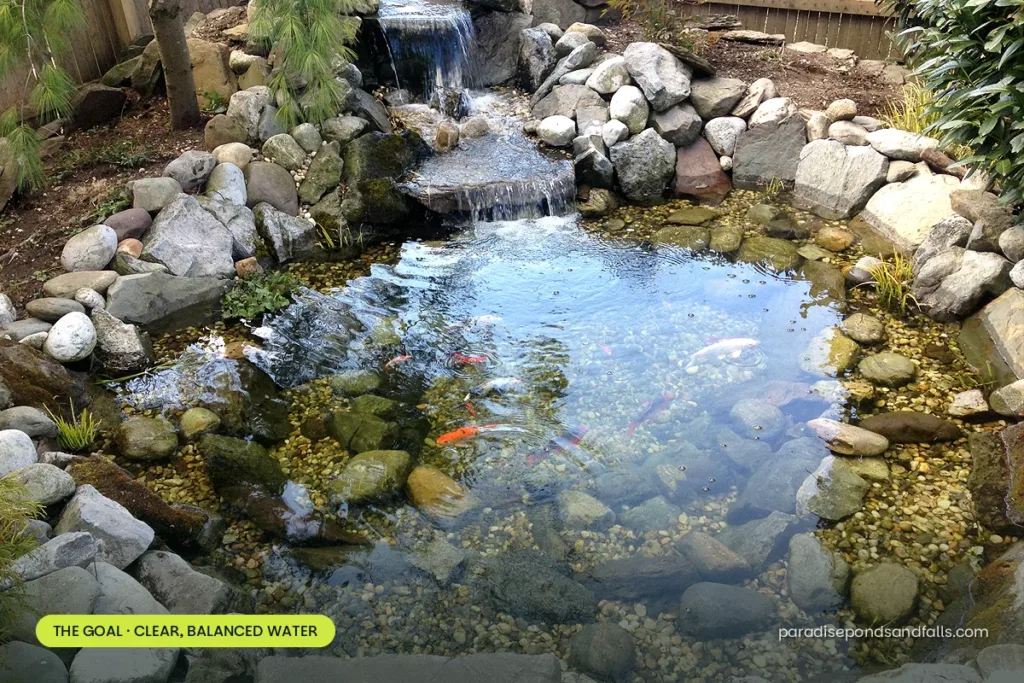 The goal: water clear enough to see the rocks on the bottom.
Quick fixes vs. lasting fixes
Some treatments clear the water fast but do not stop it coming back. The best results come from pairing a quick fix with a lasting one.
How to get rid of string algae in a pond
String algae grows when the water is clear and sunny, so it often appears just after you fix green water. Deal with it like this:
- Pull it out by hand. Twirl it onto a stick or a toilet brush and lift it out. It is the fastest and safest method.
- Add beneficial bacteria. Products made for string algae break down the nutrients it feeds on.
- Add more plants. Plants compete with string algae for the same nutrients.
- Check your waterfall. String algae loves the fast, sunny, oxygen-rich water on waterfalls and streams, so start there.
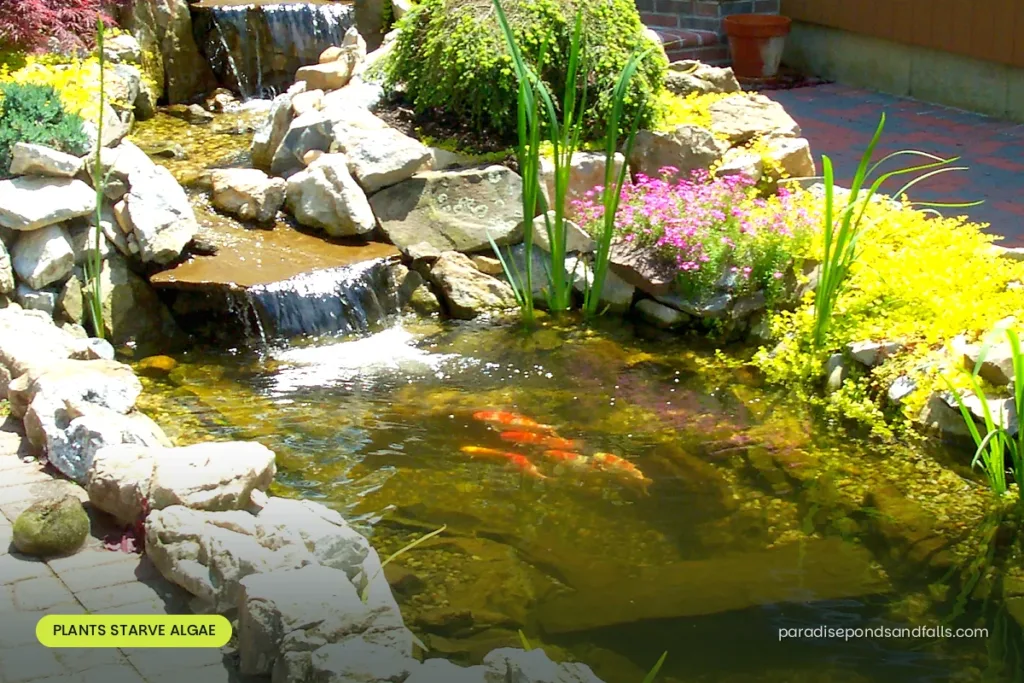 A well-planted pond leaves little food for algae.
Why ponds turn green every spring on Long Island
Almost every pond goes a little green in April or May. The sun gets stronger and the water warms quickly, but the plants have not grown back yet and the filter bacteria are still waking up after winter. Algae get a head start.
A spring clean-out that removes the leaves and sludge from fall gives algae much less to feed on. After that, the bloom usually settles on its own within a few weeks as plants fill in. If you winterize your pond properly in the fall, spring green water is much milder.
What not to do
✕ Drain and scrub the whole pond. It wipes out the good bacteria and the algae comes straight back. ✕ Dump in a full dose of algaecide on a hot day when oxygen is already low. ✕ Turn off the pump or filter at night to save power. ✕ Rinse filter media in chlorinated tap water. ✕ Keep adding fish to a pond that already struggles with green water.Is green water bad for fish?
Green water itself is not poisonous, and fish can live in it. The danger is what comes with a heavy bloom: algae make oxygen during the day but use it up at night, so oxygen can drop dangerously low before sunrise on warm nights. If your fish gasp at the surface in the morning, add aeration right away and start the plan above.
One exception: if the water looks like spilled blue-green paint or has a thick scum on top, it may be cyanobacteria (blue-green algae) rather than normal green water. Some types can be harmful to pets, so keep dogs out of the water and read the EPA's guidance on harmful algal blooms.
Our team cleans out, balances and maintains ponds across Nassau and Suffolk County. We find the reason your pond keeps turning green and fix it, so you can see your fish again.
Prefer to hand it over for good? Our weekly pond maintenance keeps the water clear all season.
Green pond water FAQs
How do you get rid of green water in a pond?
Run a UV clarifier sized for your pond, clean the skimmer and filter, change 10–20% of the water with a dechlorinator and add beneficial bacteria. To keep it from coming back, add plants to cover 40–60% of the surface and feed fish less.
How long does it take for green pond water to clear?
With a properly sized UV clarifier and a clean filter, most ponds clear in about a week. Natural methods such as bacteria and plants take two to three weeks or longer, but they keep the water clear for good.
What naturally kills pond algae?
Nothing kills algae naturally overnight, but plants, beneficial bacteria and barley straw starve it of the nutrients it needs. Shade from water lilies and floating plants also cuts the sunlight algae depend on.
Does a UV clarifier really work?
Yes, for green water caused by free-floating algae. It needs to be sized for your pond's gallons and flow, run all season and have its bulb replaced every year. A UV clarifier does not remove string algae.
Should I drain my pond to get rid of green water?
No. Draining removes the good bacteria and refilling adds fresh nutrients from tap water, so the algae usually comes back quickly. A partial water change of 10–20% is enough.
Will string algae go away on its own?
Sometimes it fades as plants grow in and the weather cools, but it usually needs help. Pull out as much as you can by hand, add beneficial bacteria and add more plants.